




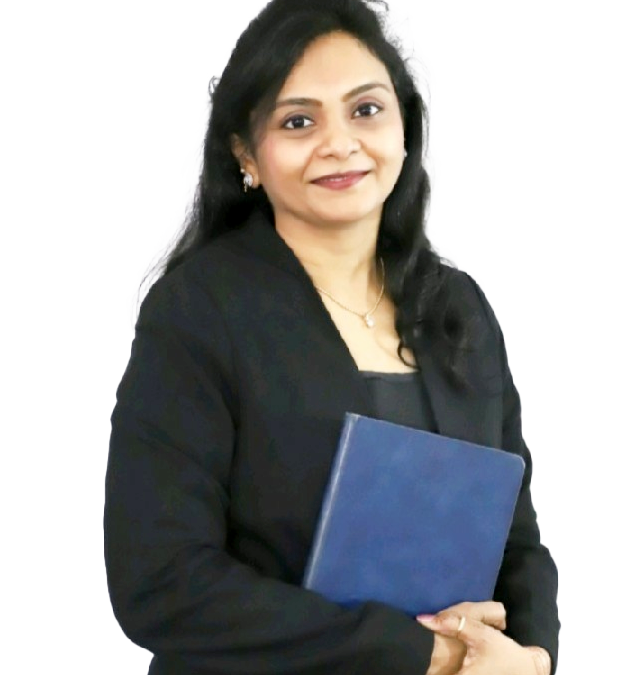

-by Smt Meetal Koticha Shah, Joint Executive Trustee & CEO – Project
‘Life’ & Senior Vice-Chairperson, Gujarat State Chapter
Ours is an era where technology has become an intricate part of our existence.

Waking up to the sound of smartphone alarm from the final moments of relaxing sleep, the mind remains engaged with screens throughout the day.
Undeniably, technology has brought unprecedented connectivity and convenience to aid performance and proficiency, yet, it has also led to mental fatigue, distraction, and restlessness. The constant influx of information, notifications, and digital noise silently disrupts inner peace and clarity. Life becomes more in ‘cloud’ than on ‘ground’.
In such times, the ancient discipline of Yoga comes across as profound and timeless therapy to help restore life’s equilibrium, showing the path to return to stillness. Yoga vehemently prescribes that peace and wisdom are not external pursuits but are inherent aspects of human existence.
Patanjali defines “Yogah chitta vritti nirodhah”, meaning Yoga is the stilling of fluctuations of the mind, which, in present context, holds renewed significance.
Continuous multitasking, information overload, and compulsive reliance on gadgets keep the mind in perpetually active mode. Consistent practice of asana, pranayama, and meditation helps to realign and retrieve mental balance, focus, and serenity.
Asana practice releases the physical strain triggered by long hours of sedentary activity and poor posture associated with device use. Pranayama, the science of controlled breathing, helps to reconnect with the rhythm of life, stabilizing the mind and harmonizing the nervous system. Simple yet effective practices like Anulom Vilom and Bhramari reduce digital fatigue and restore composure. Meditation deepens this experience further, creating space between external stimuli and internal response, the space where true stillness unfolds naturally.
Equally important is the cultivation of viveka (discernment) and vairagya (detachment), guiding principles that encourage conscious engagement with technology. Setting healthy boundaries, practicing digital discipline, and dedicating moments for silence and self-reflection helps integrate Yoga into modern life in a practical and meaningful way.
Yoga does not reject technology; it imparts balance and in fact substantiates the usage dynamics. When the outer world grows noisier, Yoga helps to subscribe to the silence within, leading to moments of quietude in which to rediscover the essentials of natural existence; of feeling calm, centred and complete.
In this context, Yoga is the process of effectively integrating the benefits of modern innovation and of remembering to pause, breathe, and reconnect with the stillness that lies at the heart of well-being. This, indeed, is the essence of Yoga in the age of technology; the journey back to stillness.
When attention is constantly divided and senses overwhelmed, Yoga emerges as a timeless pathway to inner harmony; establishing that true peace manifests not from overtly engagement with technology, but is achieved through peaceful engagement with inner self.
Embracing both progress and presence, discovering that stillness is not the absence of activity, but is the presence of awareness, let us travel and return to the stillness within……..