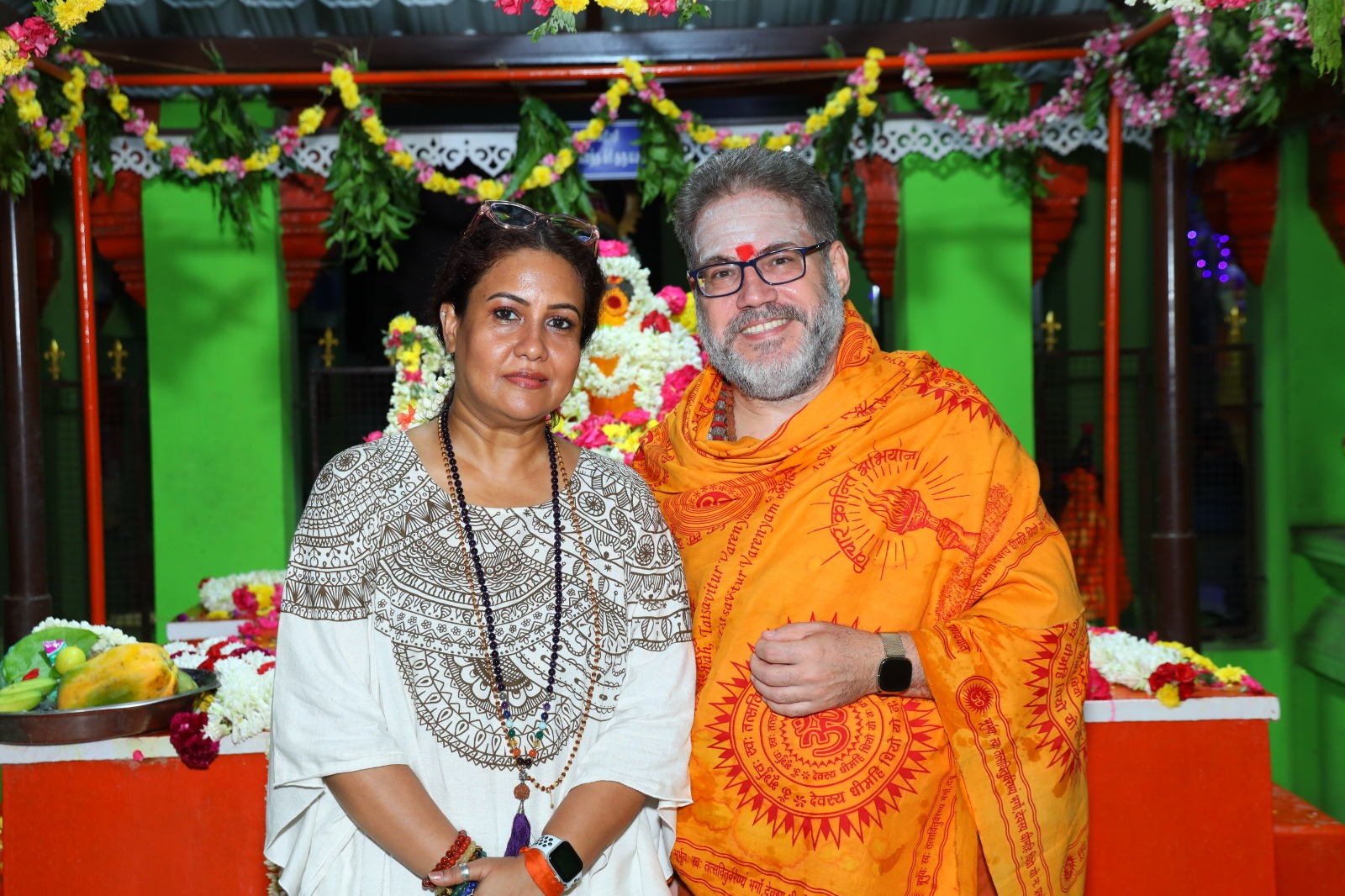

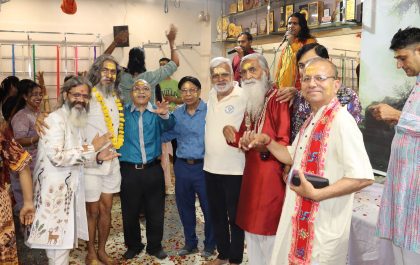


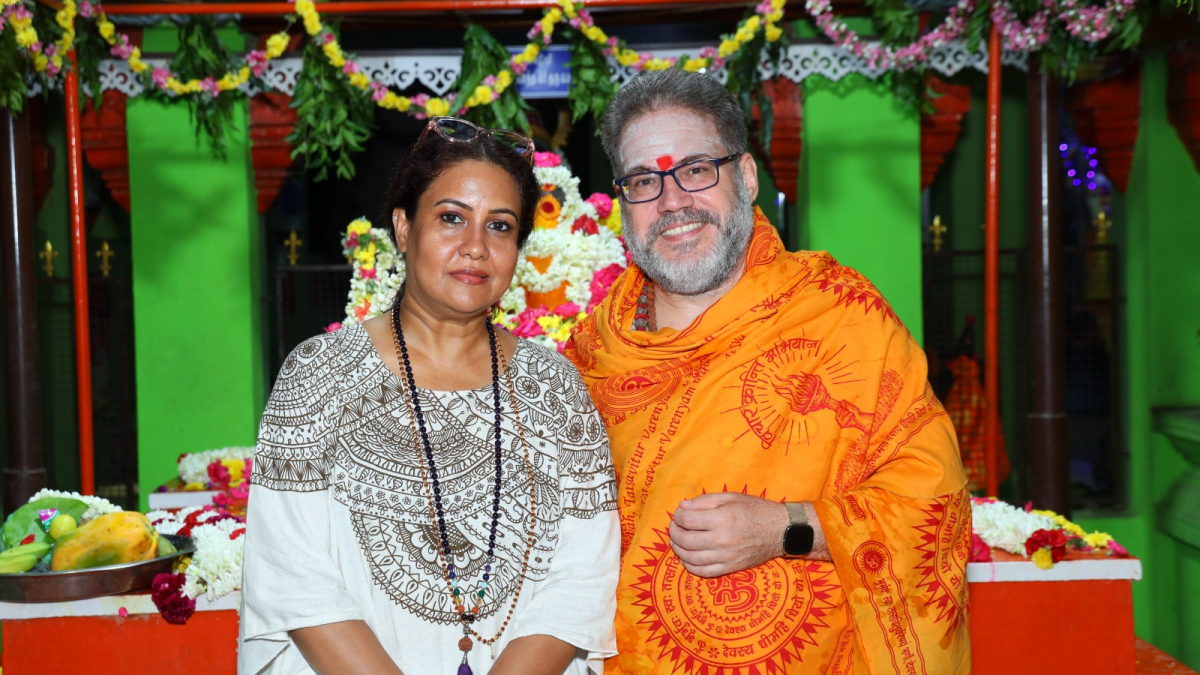

Yogacharini Anandhi Mary Cecil & Yogacharya Dr Ananda Balayogi Bhavanani
Founders of SANNIDHI: The Sacred Seeds of Yoga, India
Editor’s note: We are pleased to share this highly contemplative spiritual offering that was inspired by “The Lectures of Swami Vivekananda”. May we all awaken to higher consciousness through a life of Yoga.Humanity has always sought knowledge — of the world, of life, and of itself. From the earliest observations of the stars to the most recent inquiries into the fabric of the cosmos, we have pursued truth through experience. Whether through the physical sciences, the humanities, or spiritual traditions, the common foundation of all knowledge remains the same: experience, observation, and analysis.
In modern science, knowledge is derived from verifiable facts. The conclusions of physicists, chemists, and biologists are rooted in methodical experimentation. They ask not for faith but for replication; for others to follow the method and see for themselves. This appeal to universal human experience is what gives science its authority.Yet when we turn to religion and spirituality, we often find ourselves in murky waters. Instead of experience, we are offered doctrines. Instead of investigation, we are expected to believe. Instead of being encouraged to question, we are taught to conform. The result has been centuries of division, conflict, and spiritual stagnation. One religion claims ultimate truth, another refutes it. Wars are waged over creeds, while the deeper purpose of religion: self-transformation and liberation remains elusive.
But is this what religion truly is? Or is this a distortion?
When we trace the roots of the world’s great religious traditions, we find something striking. At the origin of every religion is the experience of a human being — not a theory, but a direct perception. Christ saw God. Buddha awakened to the truth of suffering and the path beyond it. The Rishis of ancient India, through profound inner silence, realised the eternal Self and sang their revelations in the hymns of the Vedas. Every genuine religion begins with someone who knew; who did not merely believe but perceived.
Religion, then, at its core, is not belief. It is an experience. It is the echo of the infinite in the human heart. And the science that seeks to systematise the method of attaining such experience is called Yoga.The Call of the Inner Scientist
Yoga is not a religion in the conventional sense. It does not ask who your ancestors were, what your scriptures say, or whether you subscribe to a particular dogma. It begins with a single question: Are you willing to know yourself ?
Just as Physics studies the laws of the external world, Yoga is the study of the internal world: the domain of thought, emotion, perception, and ultimately, consciousness itself. Like any science, it has its methods, its principles, its disciplines. It requires neither blind belief nor mystical sentimentality. It demands clarity, effort, and above all, practice.
In the external sciences, we use instruments: a telescope for astronomy, a microscope for biology. But in the science of mind, the instrument is the mind itself. This poses a unique challenge: the observer and the observed are the same. The subject and the object merge. The laboratory is the human psyche, and the microscope is attention itself.
The ancient yogis discovered that the mind, though naturally scattered and restless, can be trained; concentrated into a single stream of awareness. This power of concentration is the key to unlocking the secrets of both the universe and the soul. When the rays of the mind are scattered, they reveal nothing; but when gathered and focused, they illumine even the darkest corners of consciousness.
Concentration: The Gateway to Knowledge
Every advancement in human understanding has come through the concentrated application of the mind. The chemist peering through a beaker, the musician absorbed in sound, the philosopher deep in contemplation; all rely on concentration. The more the mind is one-pointed, the more it penetrates reality.
Yoga applies this principle to the highest goal: the realisation of the Self. But here, the challenge is greater. In the outer sciences, the mind naturally reaches out to objects. But in this path, the mind must turn back upon itself, studying its own movements, tendencies, and fluctuations. This is the involution of awareness, where both the question and the answer merge into the seeker.The yogi cultivates a subtle power of inner observation; a stillness so sharp that it can perceive thoughts as they arise, trace the flow of sensation through the nervous system, and ultimately see the difference between mind and the pure witness-consciousness beyond it. This witness — the Purusha; is untouched, eternal, beyond pleasure and pain, beyond birth and death.
To reach this state, the yogi must pass through the veils of the mind: the senses, the emotions, the intellect, and the I-sense. Each must be observed, understood, and transcended. This process is not abstract philosophy but a lived experience. It is a methodical, step by step transformative journey, through which the inner universe is mapped; and liberation becomes not a veiled promise but a transcendental and manifest reality.Breaking the Myth of Mystery
Over time, the discipline of Yoga has been veiled in secrecy, misinterpreted as occultism or dismissed as superstition. In some cultures, seekers were persecuted as heretics or witches. In others, the knowledge was hoarded by a few and distorted by ego and ambition.
But the essence of Yoga is not mysterious. It is rational, open to inquiry, and rooted in self-verification. There is no room for blind faith. “Believe nothing until you find it for yourself,” is its uncompromising message. If a practice is true, it will stand in the light of reason and the test of experience. If not, it must be discarded.Yoga, therefore, demands both discernment and discipline. It asks the seeker to test its methods, not just to accept them. It invites challenge, experimentation, and direct realisation. This is the dignity it offers every human being: the right to know truth, not through hearsay, but through self-effort and self-discovery.
Mind, Body, and the Path to Unity
The journey of Yoga is not only mental. The yogis recognised that the body and mind are deeply interconnected. A disturbed body agitates the mind; a disturbed mind weakens the body. Hence, the first steps of the practice involve creating physical and mental balance: neither indulgence nor suppression, but moderation and harmony.Conducive diet, healthy lifestyle, enhanced pranic awareness through breath control, and adoption of somato-psychic postures to cultivate awareness are all part of the yogic discipline. They are not an end in themselves, but are essential supportive agents for our ascent towards the higher goal. Just as a seed must be protected while it grows, so must the early stages of practice be guarded by ethical living and healthy habits. Once the tree of inner knowledge is strong, it can withstand the winds of the external world.
The final goal of Yoga is nothing less than the mastery of nature: both internal and external. By controlling the mind, the yogi discovers the subtle laws that govern reality. And as Science seeks unity behind diversity, Yoga reveals that mind and matter, self and world, thought and substance, are not fundamentally separate. The apparent duality dissolves into an unchanging unity, which is our own true being. “Sat Chit Ananda”
The Universal Right to Truth
Yoga does not belong to any one tradition, culture, or era. It is the birthright of every conscious being. Whether one is a believer or a skeptic, the call of truth must resound in every heart. All it asks is sincerity, effort, and the courage to look within.
When the mind becomes still, when the fluctuations cease, the yogi comes face to face with that which never changes — pure awareness, boundless and free. All suffering falls away. Fear vanishes. Death is seen not as an end, but as a transformation. Life, once full of struggle and confusion, becomes a luminous expression of that inner freedom.This is not a matter of faith. It is a matter of method. As sure as the sun rises, so too will the light of truth dawn in the mind that is prepared. The sages of all lands and all times have declared this. Their voices echo not in belief, but in verification. And they invite us, not to worship them, but to walk the path, practice the method, and realise the truth.
“Tat Tvam Asi”Both authors are the founder of Sannidhi: The Sacred Seeds of Yoga, a new offering that envisions the integration of traditional teachings of Yoga with modern medical understanding. It also marks the beginning of collaborative efforts by the Chairperson of the IYA Puducherry Chapter and the Vice Chairperson of the IYA West Bengal Chapter showcasing the role of IYA in bringing together Yoga traditions from all across the country