



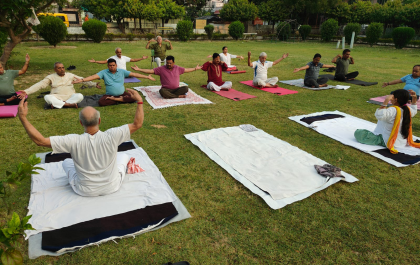
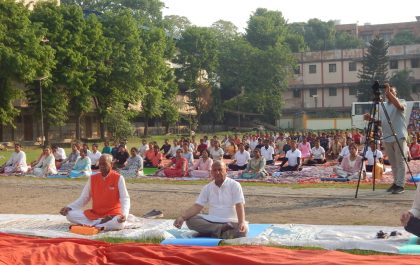


A brief Report by Yogasadhaka Nilachal
Introduction
In the second phase of the CYCLE Program, following 11 sessions in the previous year, Dr Ganesh Rao started the first session of the year illuminating everyone with his vast experience in the field of yoga. Dr. Ganesh Rao is a luminary in the field of yoga and philosophy. He holds a diverse and distinguished academic portfolio including an M.Com. in Advanced Accounting and Costing, D.M.S. in Management Studies, M.A. and Ph.D. in Philosophy, D.N. in Naturopathy, D.Y. Ed. in Yoga Education, and certifications in Madhyama Yoga Siksha and First-aid/Home Nursing. With over 20,000 yoga sessions conducted worldwide encompassing workshops, conferences, counseling, and therapy, Dr. Rao is celebrated as one of the 100 most inspiring yoga teachers in India.

He has authored and co-edited several books, including works on yoga philosophy and practice, including “The ‘Zen’ith of Football,” “A Matter of Perspective (An Account of a Strange Outsider),” “Meditation in Yoga” (in “Meditation: Oriental and Occidental”), “Universal Brotherhood Through Yoga,” and “Essentials of Yoga.” He has also recorded CDs on Yoga Nidra and Panchakosha Dharana. Additionally, he has mentored eight Ph.D. scholars, served as a technical expert for various yoga certification boards, and held esteemed positions across academic and cultural institutions. As a former professional soccer player, Dr. Rao represented Maharashtra at the national level for six years and later transitioned to coaching, impacting over 5,000 players. He remains a passionate high-altitude trekker, frequently exploring the Himalayas and Sahyadri mountains over the past 25 years.
Therapy and Its Foundations
The term ‘therapy’ originates from the Greek word therapeia, meaning curing, healing, or service. Therapy encompasses a wide spectrum, ranging from care to surgical intervention, and stressed the vital role of active listening in the healing process. When it comes to Yoga Therapy, it integrates physical practices and philosophical tenets to address both symptoms and root causes of ailments. Yoga therapy involves practices like kriyas, asanas, pranayama, mudras, meditation, as well as yoga philosophy to address physical, mental, and spiritual health.
Core Principles of Yoga Therapy
- Holistic Approach: Yoga therapy addresses the person as a whole—body, mind, energy, and consciousness.
Body and Mind Integration:
Both the body (Sthula Sharira) and the mind (Sukshma Sharira) arise from Prakriti (matter) as per Sāṅkhya philosophy. The mind is considered subtler than the body, and disturbances in the mind often manifest as physical ailments. For example, more than 95% of physical illnesses, including hypertension, diabetes, and skin issues, are psychosomatic in origin.
Role of Prana:
Prana (life force energy) acts as a bridge between the body and the mind. When Prana becomes gross, it gives rise to the physical body; when subtle, it gives rise to the mind. By regulating Prana through techniques like pranayama, yoga therapy impacts both physical health and mental equilibrium.
Consciousness:
The subtlest dimension of a person is consciousness, often overlooked in modern therapeutic approaches. Yoga therapy emphasizes connecting to this core of awareness, leading to a deeper sense of self and spiritual well-being. - Focus on the Person, Not the Problem: One of the foundational tenets of yoga therapy is that the problem belongs to the person, but it does not define them. This distinction is crucial for effective healing.
• Avoiding Over-Identification with Illness:
Many people unconsciously identify with their ailments, saying things like “I have diabetes” or “I am hypertensive,” which reinforces their condition. Such labeling entrenches the problem in the psyche, making recovery harder. Yoga therapy encourages careseekers to shift this narrative, reframing it as “My body sometimes has issues with sugar levels” or “My blood pressure fluctuates occasionally.”
Empathy and Perspective:
The therapist focuses on understanding the person as a whole, including their lifestyle, relationships, and emotional well-being. The therapy process involves addressing underlying causes, such as stress from work or relationships, rather than just mitigating symptoms.
Humanizing Therapy:
Yoga therapists are encouraged to view individuals as fellow human beings, not merely ‘clients’. Compassion and genuine concern are as essential to therapy as the techniques themselves.
- Role of Awareness: Awareness is central to healing, helping individuals disassociate from suffering.
Consciousness vs Awareness:
Consciousness is always directed toward an object, whether external (a sound, sight, or sensation) or internal (a thought or emotion). Awareness, however, is the consciousness of consciousness itself—an ability to observe one’s own mental and emotional states without being consumed by them.
Watching the Mind:
The principle of “watching the mind” is central to yoga therapy. For instance, when someone feels angry or sad, acknowledging the emotion as, “This mind is feeling angry” rather than “I am angry” creates a sense of detachment. This disassociation helps diminish the emotional charge and fosters clarity.
Four Dimensions of Yoga Therapy
- Yoga for Prevention
Yoga as a preventive discipline aims to cultivate a lifestyle that minimizes the likelihood of illness.
Lifestyle Integration: Encourages adherence to yogic principles, including balanced diets, adequate rest, relaxation, and regular physical activity.
Preventive Practices: Incorporates asanas, pranayama, dharna, and dhayana to maintain physical and mental health.
Wellness Focus: Emphasizes cultivating habits that support overall well-being and reduce vulnerability to disease. - Yoga as Therapy
This dimension targets specific physical and psychological ailments through tailored yoga practices as mentioned in various yogic texts.
Application: Focuses on alleviating physical ailments and mental conditions like conditions like back pain, hypertension or anxiety focussing on the root causes of issues, incorporating yoga philosophy to address lifestyle
Complementary Approach: Works alongside modern diagnostic tools and medical treatments to provide comprehensive care.
Tools: Employs kriyas, pranayama, asanas, mudras, and meditative practices for targeted relief.
- Yoga as a Healing Procedure
Yoga therapy supports individuals dealing with chronic or terminal conditions.
Emotional Empowerment: Encourages emotional and philosophical resilience to help patients cope with their condition.
Outlook Shift: Guides individuals to make the most of their remaining time by transforming their perspective on life.
Perspective Shift: Healing is not limited to curing but includes fostering acceptance, inner peace, and purpose.
- Yoga as a Tool for Transformation
Yoga therapy ultimately seeks to guide individuals toward self-realization and inner awareness.
Spiritual Awakening: Facilitates the transition from identifying with the body and mind to realizing the deeper self (consciousness).
Cultivation of Awareness: Enables individuals to transcend suffering by becoming observers of their thoughts and emotions.
Goal: This transformational aspect of yoga therapy transforms one’s life perspective, leading to lasting peace, contentment, and self-realization.
Enlightened Discrimination: The Permanent Solution
Enlightened discrimination refers to the profound realization of one’s true nature as consciousness (Purusha), beyond the transient body and mind. Rooted in Sankhya philosophy, it enables individuals to distinguish the permanent from the impermanent, recognizing that lasting peace and fulfillment arise from within rather than from external, temporary sources. This clarity is achieved by answering the existential question, “Who am I?” and shifting identification from the physical and mental self to the deeper consciousness. Enlightened discrimination also integrates awareness, helping individuals live with wisdom and make choices aligned with their higher self. In yoga therapy, it serves as a cornerstone for transformation, guiding individuals to transcend suffering and experience true healing and liberation.
Important Practical Applications in Yoga Therapy
Dr. Ganesh Rao ji advocated for a shift from “doing yoga” to “being yogic.” This means extending yoga’s principles to all aspects of daily life.
Yoga’s effects extend beyond the duration of practice due to momentum. For example, practices like kapalabhati elevate metabolic rates, and their benefits persist long after the session ends. This momentum reinforces the importance of consistency in yoga practices.
Yoga therapists must be equipped with basic first aid skills. One should know the importance of handling acute injuries and emergencies using yogic techniques as well as first aid knowledge.
Sweating through physical exertion is a natural therapeutic tool, particularly for mental health issues like depression. Engaging in activities that elevate the pulse rate helps release endorphins, improving overall well-being.

Conclusion
Dr. Rao emphasized that the ultimate goal of yoga is samadhi, a state of complete equilibrium and self-realization. Therapy, while important, is merely a means to this end. He cautioned against becoming overly focused on health to the point of paranoia. Instead, yoga teaches graceful aging and a balanced approach to life.
He concluded by reiterating the transformative potential of yoga therapy. It not only addresses physical and mental ailments but also offers a pathway to self-awareness and spiritual growth. By focusing on awareness, prana, and holistic well-being, yoga therapy empowers individuals to lead fulfilling and meaningful lives.