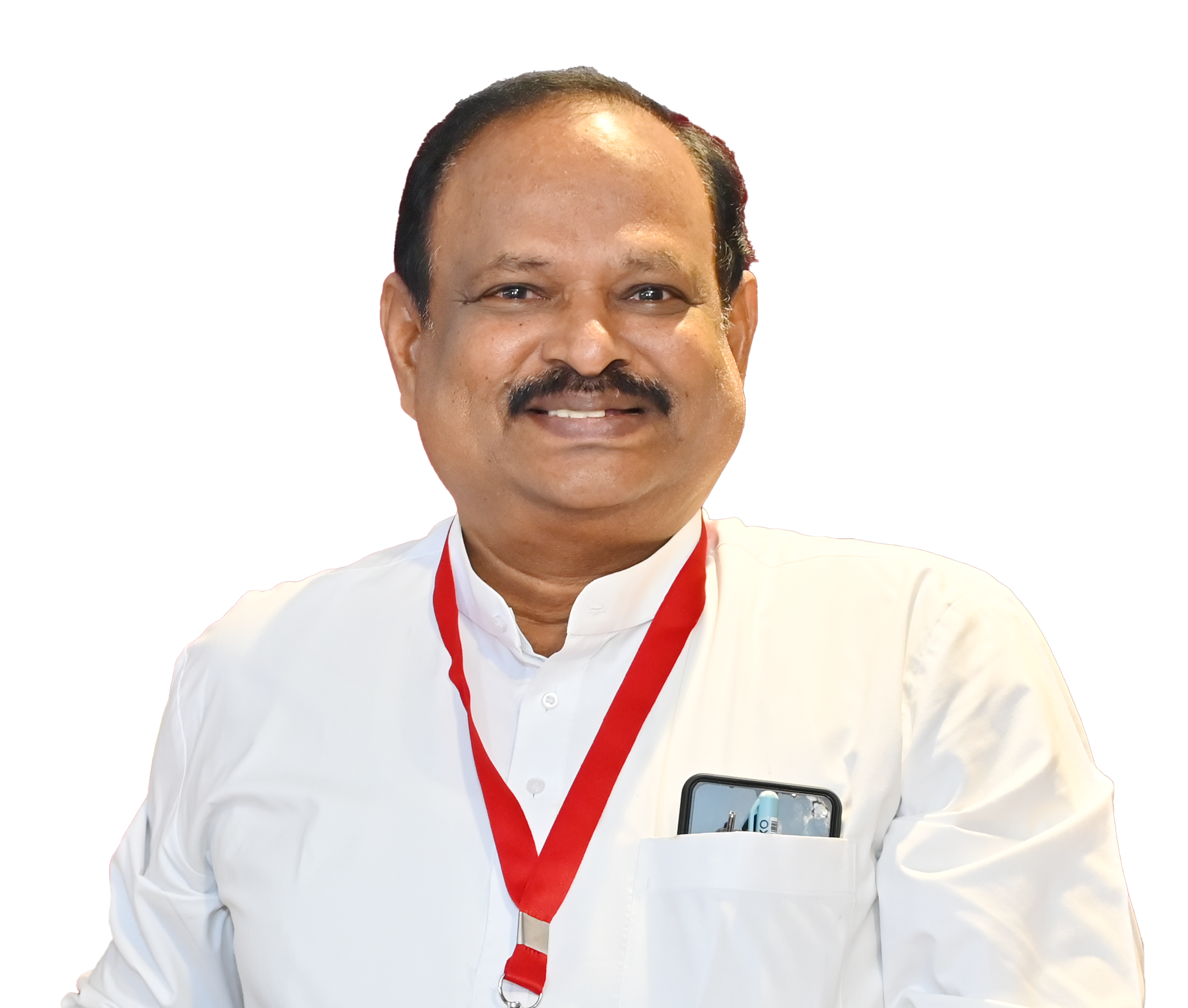



by Prof. Dr. R. Elangovan Secretary, Tamil Nadu State Chapter Committee and Executive Committee Member, Indian Yoga Association
Yoga is an invaluable gift of India’s ancient tradition. It is a science of being’s evolution. It is a science of activating inner energies. Blossoming of human potential to its fullness is Yoga. Yoga is a scientific study of balanced intellectualism. It is the scientific tool to get experiences to its depths and dimensions. It is a scientific process of enhancing total wellbeing to find out the highest possible potentiality. It is one of India’s best exports to the world. It is a trans- continental hybrid practice. As one embraces this path, the transformation transcends physical prowess, blossoming into a holistic mastery that enriches every facet of existence. Yoga is a transformative path that leads to peace and harmony. Peace is one of the pillars of the world, without it, the social order cannot exist. Yoga fosters world peace, mitigates the consequences of climate change and combat-armed violence, also.
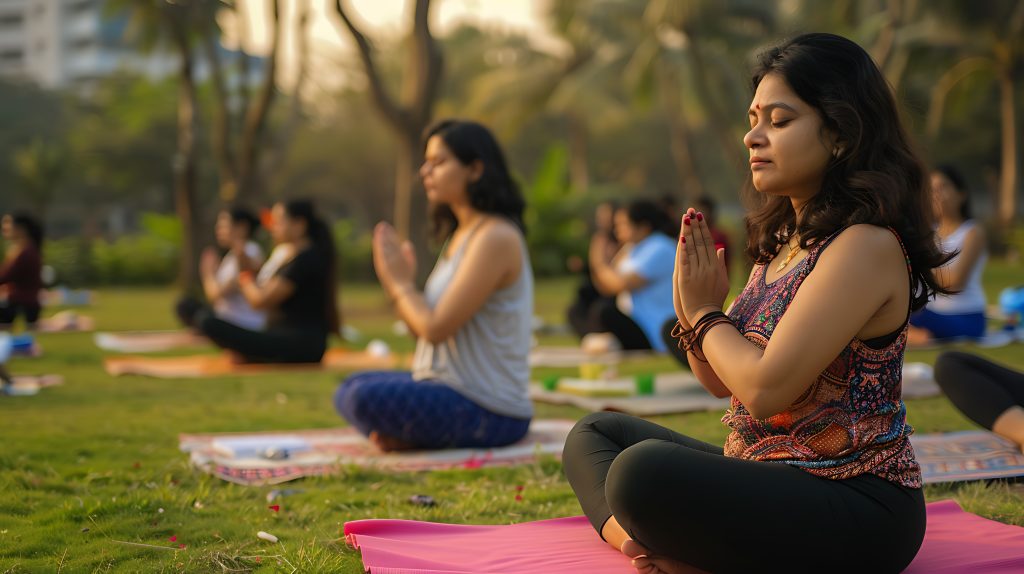
Yoga is a symbol of stability in a world going through crises. Yoga’s core philosophy of balance – between body and mind, humans and nature, consumption and conservation – offers relevant solutions for contemporary challenges; Yoga therapy provides a framework that addresses both personal and planetary health. It is a preferred choice for rejuvenation and preventative care. Yoga transits individuals from ‘me’ to ‘we’. Yoga is a transformative path that leads to inner peace, freedom, spiritual realization and ultimately world peace.
Controlling mind is Yoga (Yoga chitta vritti nirodha) – Yoga Sutra 1.2
Excellence in action is Yoga (Yogah Karmasu Kaushalam) – Bhagavad Gita 2.50
Equanimity is Yoga (Samatvam Yoga ucyate) – Bhagavad Gita 2.48
Our life revolves around these three concepts.
Yoga therapy provides a framework that addresses both personal and planetary health. It is a preferred choice for rejuvenation and preventive care. The approach of Yoga Therapy emphasizes health care that is preventive, affordable, inclusive and sustainable. Yoga Therapy’s expansion is the need of the hour. It reflects a fundamental shift in health care philosophy from reactive treatment models to proactive, preventive approaches that address root causes rather than symptoms alone.
Latest trends in medicine, nutrition and yoga:
Yoga 2.0: It is a modern, updated, next generation version of yogic practices with new modern products, are in practice now. Yoga Therapy 2.0: It is based on anatomical, physiological, and psychological based concepts than the traditional factors such as Panchaboodhas, Koshas, Doshas etc., which is very famous now. Current world depends on Medicine 2.0: refers to the integration of Web 2.0 technologies and principles into health care, which is to treat the patient, particularly with holistic approaches. The world moves slowly into Medicine 3.0, which identifies markers of disease based on an individual’s unique genetic and medical history and concentrates on personalized approach to wellness and preventive care before actual disease sets in to live long. Nevertheless, our traditional systems of medicine, including yoga therapy, follow already individualized treatments and advocate the preventive approach a long back. As far as nutrition is concerned, Nutritional biochemistry and Nutrigenomics are the modern approaches. Functional foods 3.0 are famous now. It is highly personalized and pegged to our own unique health parameters. Western Psychologists coin Pranayamas now as breath work techniques. Zone Zero training is popular globally, resembling asanas .VR Meditation is an AI assisted digital technique, is also popular. When it is done, EEG will show at once, and we can understand which type of wave in our brain is present. 5 minutes of yogic practices (2min asanas, 2min pranayama and 1min meditation) is famous now. AI based mechanical tools, particularly mood trackers, VR therapy, and specific apps, are available now with the inclusion of the regular practices like meditation, pranayama mindfulness, affirmation, etc., to promote mental health. “Decode yourself, eat right, and do yogic practices – live long qualitatively minus disease” – is the latest mantra.
Notable Developments of yoga in the last eleven years in India:
The resolution to establish International Yoga Day was adopted in December 2014 at United Nations Organization. The first International Day of Yoga was celebrated worldwide on June 21st, 2015. The Government of India gives the Prime Minister’s Awards for Yoga annually. Yoga and tourism have become a major source of employment. ‘Yoga economy’ has immense potential for employment generation. India is the leading exporter in yoga props. 100% foreign investment is directly allowed in India to promote yoga. Pakistan Government has also accepted yoga officially to handle classes at its parks Thiruvalluvar Cultural Centers are being opened worldwide by the Central Government to popularize yoga. Yoga is included in Saudi Arabia’s educational system; Yoga – specific schools are established in Mongolia; Short-term yoga programs are introduced for foreign tourists. Tourist visa and e- visa are available for foreigners to learn yoga in India. Full pledged yoga departments are introduced in a few specific Central Universities. Ph.D. program in yoga with full financial support for it is available for foreigners. Certification for yoga teachers and yoga centers are also officially introduced; UGC-NET examinations are conducted regularly in yoga. Yoga is introduced in teacher training and professional courses. A few AYUSH universities are being established in India. Yoga therapy is adopted in Turkmenistan medical universities. A few seats are available exclusively for yoga in the M.D. program in Yoga and Naturopathy in Tamil Nadu. NCTE is to introduce 4- year B.A B.Ed., B.Sc B.Ed programs soon in yoga. 40.8% approved doctors in India are AYUSH doctors. The death rate of pregnant women during delivery has decreased in recent times in Tamil Nadu. Percentage of cesarean cases have come down due to yogic practices in Tamil Nadu. King Charles III of England visited Bengaluru to undergo holistic treatment in traditional medicine systems for his cancer. Leading hospitals started launching traditional medicine system centers in India; World Health Organization (WHO) approved yoga as a Traditional Complimentary and integrative Medicine (TCIM) along with Ayurveda. Siddha and Naturopathy. India signed with WHO to integrate yoga into allopathic medicine and primary health services and for promoting research in AYUSH subjects; World Health Organization’s Global Center for Traditional Medicine was instituted in Jamnagar, Gujarat. Traditional medicine systems were included in the 11th revision of the WHO’s International classification of diseases (ICD) recently. A yoga trainer with Indian contingent was sent for 2016 Rio Olympics; Hybrid classes have become popular for yoga enthusiasts to enhance their holistic development. Yoga has become a recognized demonstration sport at the 2026 Asian games. Yoga is mandatory for medical students. For 2025 International Day of Yoga, the central government spent Rs.120 crore, three times higher than the year 2024. International Meditation Day will be celebrated every year on 21st December worldwide.
Srimad Bhagavad Gita has been inscribed in UNESCO’s Memory of the world Register. Existing parks in rural and urban areas are being converted into Yoga parks for making Yoga more accessible, visible and mainstream for people from all walks of life. It is being made a unifying inclusive cultural movement. India becomes first nation in the world to digitize traditional systems of medicine with AI – powered library to preserve ancient health practices and support future research. These are not merely achievements in Yoga, It is the intellectual decolonization that India awaited for a long time, which will catapult India into the comity developed Nation. Indian Yoga Association reaffirms yoga’s universal relevance in fostering global health, harmony & well-being. Indian Yoga Association (IYA) is doing a lot for the promotion of yoga throughout the world.
Let us all hope that through yogic way of life, we are all able to be kind, compassionate, loving, tolerant, nonviolent so that our planet is illuminated with peace, harmony, divinity, bliss and wisdom.
Ways and means to strengthen the fields of yoga and yoga therapy:
Yoga should be included in schools’ educational system (curriculum) compulsorily. ‘Five minutes yoga break’ will be extended to all the departments and organizations each and every day at the national level. Separate yoga departments should be established in all the central universities and are deemed to be universities at least. Academic jobs are to be created for undergraduate, postgraduate students, and Ph.D holders. One yoga expert for 1000 people should be appointed by the Govts to promote holistic well-being of the people. Steps to be taken to export yoga experts to popularize yoga globally through National Skill Development Corporation, including for yoga props. Yoga therapists are to be treated on par with other health care professionals; Steps are to be taken to popularize yoga therapy in other countries as like the steps taken for Ayurveda. Autonomous National Regularly Body is needed for yoga therapy. Medical insurance schemes in the yoga therapy sector are to be available. Yoga therapy should be included in the ISD-11 TM-2 of World Health Organization. Each Government hospital should have one yoga therapist atleast. Special economic zones are to be established in each state for yoga AYUSH tourism should be strengthened; Grants to be given to establish yoga centers. Yoga research Grants should be made available for all the Yoga related research scholars. Yoga writer incentives are to be extended to all the states; Meditation halls are to be constructed in each and every village; Yoga modules are to be designed for all walks of life, including high- risk groups and for all stages of life, including for women. Strong inter-Ministerial coordination as well as between central and state governments are essential to promote the fields yoga and yoga therapy in these regards.
The governments should allocate budget exclusively for yoga therapy. Full integration of Yoga Therapy into primary healthcare and universal health insurance schemes are to be introduced; Updating national diagnostic manuals and policies are required. Establishment of rigorous cascade – based monitoring and evaluation system nationwide is essential. Public campaigns and ensuring literacy should be reached all. Stronger inter-ministerial coordination aligning health, Education, social justice is indispensable. Women & child welfare and labour policies can be created to maximize synergies and outcomes. India must treat Yoga Therapy (Yoga health) as an emergency, not as an afterthought with independent funding and clear accountability. Counselling must become a public infrastructure, not a charity. Every school, college, hospital should have a trained yoga therapist funded by central budgets. Special outreach programmes are needed for high-risk groups such as homemakers, skilled and unskilled laborers, aged and students etc., Regulation of digital health eco-system with apps and AI tools in Yoga Therapy are also important.
Planning and Execution what the future are essential if yogic administrators are to take an active part in the direction and shaping of the future of Yoga. Such Planning requires that yoga professionals recognize that rapid change is characteristic of our way of life. The wellness movement and the fitness movements to involve individuals of all ages is appropriate divine activity.
More than even before, we need to inform the public and decision makers about the contributions of yoga to the society. Expanding frontiers of the habitable universe, preparing for space and underwater living, developments to communications and other technological developments including the services of artificial intelligence will influence the future of Yoga. Yoga needs to improve the delivery systems. The future of Yoga is bright but we only must determine how much it is to be brighter.