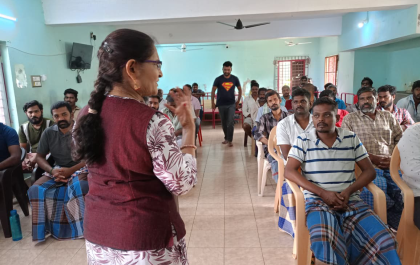
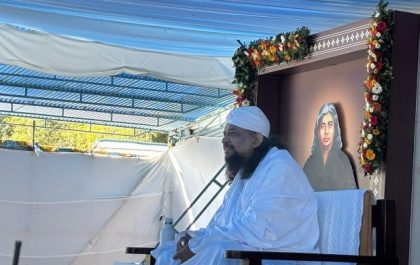
The Institute of Salutogenesis and Complementary Medicine (ISCM) of Sri Balaji Vidyapeeth (SBV), in association with the Mother Care Foundation (MCF)—a centre for alcohol and cannabis de-addiction and rehabilitation; organised and conducted an awareness program on de-addiction and rehabilitation — in collaboration with the Indian...
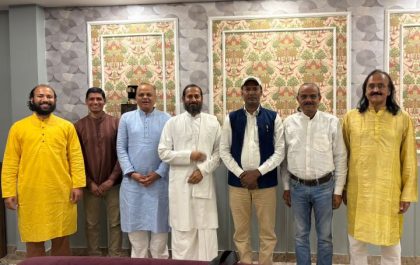
he Bihar State Chapter Committee of the Indian Yoga Association convened its meeting on 27 February 2026 from 5:00 pm to 7:00 pm at Energy Yoga Healing Centre, Patna. The meeting was attended by all newly appointed Executive Committee members and focused on strengthening the...
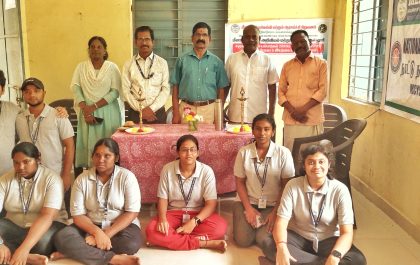
Reaffirming its commitment to community well-being and the propagation of yoga, the Faculty of Yoga Sciences and Therapy (FYST), Meenakshi Academy of Higher Education & Research, Chennai — an Associate Centre of the Indian Yoga Association — conducted a five-day Social Service Activities and Free...
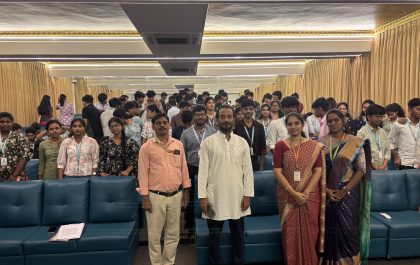
On the occasion of National Youth Day, Dr. Kaushik R, Founder of Oordhvam Yoga, an Associate Centre of the Indian Yoga Association, delivered an inspiring one-day workshop titled “Elevate Your Well-Being: Tools for Calm Minds, Healthy Bodies & Stronger Connections.” The session took place at...
The Yogis Foundation successfully held a two-day Yoga and Meditation Camp on 7th and 8th February 2026 at the Yogis Meditation Center, Ambasamudram, Tirunelveli District, Tamil Nadu. The camp witnessed enthusiastic participation from aspirants and yoga practitioners representing various regions across the state. Designed as...
S V Yogalaya, Arumbakkam, Chennai, an Associate Centre of the Indian Yoga Association, marked significant occasions with devotion, discipline, and yogic awareness through a series of meaningful programmes. On the occasion of Republic Day, a grand archery event was organized at S V Yoga Center,...
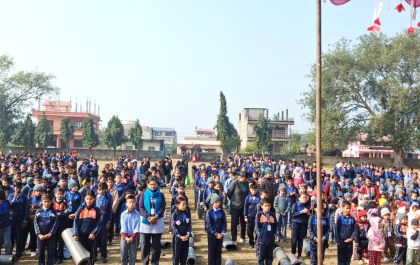
Under the joint aegis of YogaPeace Sansthan and the Indian Yoga Association, an inspiring yoga-awareness programme titled “Anandam – How to Live Joyfully in Life” was successfully organized at Tribhuwan Higher Secondary School, Shankar Pokhari 33400, Ward No. 3, Pakhar Chor Parvat, Nepal. The programme...
Swayamsiddha Yoga, an Associate Centre of the Indian Yoga Association, successfully organized its 11th Surya Namaskar Vinyasa with great enthusiasm and participation. Dedicated to the promotion of yoga for the past 30 years, the institution conducted this grand event under the able guidance of Yogacharya...
In a vibrant celebration of yoga and collective wellness, the Art of Living, in collaboration with the Indian Yoga Association – Gujarat Chapter, successfully organized Yoga Mahotsav at Deesa, Gujarat. The grand event witnessed the enthusiastic participation of more than 300 yoga practitioners and wellness...
The Universal Peace Foundation, an Associate Centre of the Indian Yoga Association, organized a series of spiritually enriching, educational, and nationally significant programmes during January and February 2026 at its Gnanapeedam, Thirumoorthi Hills. These events reflected the Foundation’s continued commitment to youth empowerment, spiritual awakening,...
The word “Protocol”, as per dictionary means, among others, ‘a detailed plan of a scientific or medical experiment, treatment, or procedure.’ “The word “Yoga Protocol” came into coinage with the beginning of celebration of the International Yoga Festival (IDY) on 21st June 2015. ‘Common Yoga Protocol’ (CYP) as it is famously known, was designed to celebrate the IDY all over the world. The CYP was designed by a Committee of Yoga Experts and consists of five sections. Section 1 – Cālana Kriyās (Loosening practices); Section 2 – Yogāsanas; Section 3 – Kapālabhāti; Section 4 – Prānāyāma; Sec+on 5 – Dhyāna. This follows a flow of Āsana to Prānāyāma to Dhyāna as found in the Yoga Sūtra. A lot of discussions among the experts went into before finalising this structure, which follows certain rules rela+ng to placement. This flow, following rules, is called “Vinyāsa-krama”, which means ‘placing specially in a correct order.
Portrait of healthy young Asian woman practicing yoga exercises sitting in the bedroom and learning online on laptop at home. Concept of exercise and relaxation, Technology for New normal lifestyle
Is the design and prac+ce of Yoga Protocol of recent origin? Structuring prac+ce of Yoga originated from the Vedic period and a number of Vedic rituals, found in the Karma Kānda, has Protocols. The famous example is the ‘Prayer to Sun” (Sandhyāvandanam) which is model of medita+on followed from +me immemorial. It has detailed steps leading to a Medita+on using Gāyatrī Mantra (Japa) and comple+ng with certain steps. This is different from ‘Sūryanamaskar’ series which is also a Yoga Protocol focussing mainly on body postures. Such crea+on of Protocols con+nues even now and a number of Protocols using all the three limbs of Yoga, i.e., Āsana, Prānāyāma and Dhyana, either together or independently, are brought out by Yoga Gurus, Ins+tu+ons with Research ou]its , etc.
Crea+ng a structure based on the rules as given in the authorita+ve texts or teachings of authorita+ve Gurus or research findings, gives the advantage of crea+ng a good base. Also, Yoga Protocols are structured with different goals. They are oriented towards a_aining a par+cular goal. It can be Spiritual or just physical and mental fitness or therapeu+cal addressing illnesses. Oben, they are based on certain scien+fic findings of the employment of the tools of Yoga on a group of students.
Whether one likes or not, the Yoga Protocols are growing, and we will be witnessing a number of Yoga Protocols in the future. Should we accept the Protocols or reject them altogether? Let us take the case of IDY Common Yoga Protocol, meant to showcase the efficacy of ‘What and Why of Yoga’ and prac+sed in very large gatherings on 21st June every year at 7 am all over the world. Over the years a lot of people have been found to prac+ce the CYP every day in Parks in the morning. Even a scien+fic study undertaken has brought out posi+ve results by the prac+ce of CYP. But then, is there another side to this? Yes. A common protocol assumes certain fitness levels at physical, mental and emo+onal levels of individuals. No two individuals have common characteris+cs. They differ from one individual to another at body, breath and mind level. Forcing oneself to a_ain certain levels will harm the individuals.
Portrait of healthy young Asian woman practicing yoga exercises sitting in the bedroom and learning online on laptop at home. Concept of exercise and relaxation, Technology for New normal lifestyle
It should be understood that Yoga Protocols are perfected goals discovered aber intense prac+ce, observa+on, experience and consolida+on. They are the ul+mate to be achieved. In general, it cannot be a star+ng point nor it should be directly prac+sed without the supervision of a qualified and competent teacher who has achieved certain levels of perfec+on and thus has the ability to understand the mechanics of the Yoga Protocol and the individual human system to match them. The teacher will hand-hold the student individually step by step with proper adapta+on and modifica+on to lead to the ul+mate goal. That is why in the ancient days they are supposed to be held ‘secret’ (Rahasya). Even in the present the prescrip+on that no medicine should be consumed without the guidance of a qualified doctor goes with this idea.
How to take advantage of the Yoga Protocols and avoid any harmful side-effects? This is made possible by the delivery (teaching) of the Yoga Protocols by qualified and competent yoga teachers. A competent yoga teacher is one who prac+ces yoga intensely, experience and pass on the experience suitably adap+ng the tools to everyone. We cannot ‘wish-away’ Yoga Protocols but should strengthen the system to produce competent and commi_ed Yoga Teachers and safeguard the wonderful, good effects of Yoga Protocols. The teacher will make suitable adapta+on at macro and micro levels of the prac+ce. Every Yoga Protocol should contain the disclaimer clause that ‘they should be learnt under a competent teacher and prac+sed.’ The idea of ‘ini+a+on’ (Sīksa) of all the rituals by one teacher to one student follows this golden principle.
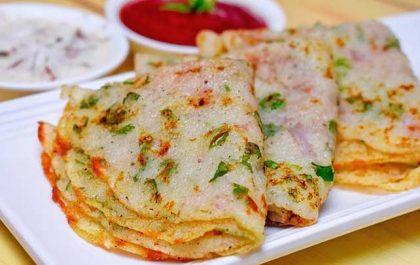
–The Yoga Institute Sago Chila is rich in energy, gluten free and non-allergic. It has high nutritional value. It is less in calories, reduces weight. It is good for diabetic patients. It is high in protein, which helps in growth and maintenance of cells. It...