



Historical Background of Yoga Research at Kaivalyadham:
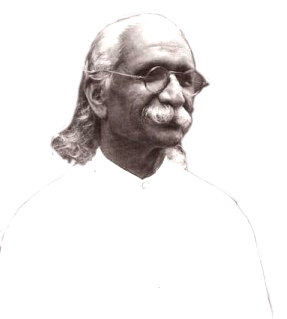
Late Swami Kuvalayananda (1883-1966), was a pioneer in Scientific Yoga, and Founder Director of Kaivalyadhama Yoga Institute, Lonavla. He was initiated into yoga by his Guru, Paramhamsa Swami Madhavdasji of Malsar, after which he founded Kaivalyadhama, Lonavla in 1924 for promotion of scientific research in Yoga.
Swamiji was convinced that the potentialities of Yoga would be accepted by modern man only if the benefits of yoga could be proved and demonstrated through scientific tests and researches. Because the man of today accepts only those things as real which are proved by modern scientific tests. “Be with caution, bold”- that was often a repeated statement of Swamiji. Its meaning was that we should not follow the traditional ideas without critical examination. Blind faith must give way to scientific scrutiny. With his exceptional training and exposure to yoga under revered gurus, Swami Kuvalayananda sought to revolutionise the global outlook towards this ancient Indian tradition.
Swamiji’s vision was to explore the claims of traditional yogic texts such as Patanjala Yoga Sutra, Hatha Pradipika and Gheranda Samhita, which deal with higher mental and transcendental states. He started his research journey from fundamental to applied aspects, exploring the scientific basis of yogic therapy through a multidisciplinary approach. He investigated the effects of yogic practices on various biochemical, physiological, and psychological parameters in the body. The results of his experiments were revolutionary, revealing the significance of nostrils in breathing, gastric tone as influenced by mental states and meditation, muscle activity in asanas and in exercises, heart control and yoga practices, Pranayama in withstanding CO2, and stress recovery through yoga. The radiological studies and Barometric and Kymographic study on yogic practices and techniques like Uddiyana, Nauli, Pranayama, Kapalbhati etc., have brought out several highly significant studies which have become integral part of scientific yoga today. Swamiji documented his findings in Kaivalyadhama’s Yoga Mimamsa Journal, the first scientific research journal of its kind on yoga. Further, he recognized the contribution of yoga in the field of physiotherapy and psycho-somatic disorders.
Scientific Research Department or Legacy carried forward
To carry forward the legacy of Swami Kuvalayananda, the scientific research department (SRD) continues to operate and investigate the scientific relevance of yogic practices. SRD is divided into four specialized departments with a team of highly qualified and respected psychologists, doctors, and scientists: 1) Biochemistry section- to understand the impact of yoga practices on living cells in the human body as well as the reactions and processes that these cells undergos.
2) Physiology section-to evaluate the physiological changes after yoga practices. Physiology is the science of body functions. It is the study of mechanical, physical and biochemical properties of living organisms.
3) Psychology section- to understand the effects of yoga practices on various psychological processes like memory, learning, perception, personality, social orientation, self-development, motivation and the physiological basis of psychology. Psychological counselling is also provided to the patients visiting health care centre. The counselling aims to help people manage their difficulties and transform & sublimate personal problems into their own personal growth.
4) Physical Education section- aims to develop physical competence, fitness and knowledge of movement and safety, as well as, the ability to use these to perform a wide range of activities associated with the development of an active and healthy lifestyle.
Together, these divisions work in harmony to investigate the science behind yogic practices. Their work includes studying the therapeutic effect of yoga in diabetic patients, efficacy of yoga practices on adolescent students with suicidal tendencies, levels of antioxidant enzymes after yoga practices, ability of yoga to reduce inflammatory responses of the body, improvement in micronutrient absorption in school children, impact of yoga in improving cardiovascular health, and impact of yoga practices on the attention span of intellectually disabled children. With a proven track record, and continued dedication, the SRD makes constant advances to propagate the vision of its founder.
The Department offers M.Phil and Ph.D. degrees in Yoga. SRD has associations with other Indian universities, and collaborates with scientists in Europe and the USA for fundamental and applied research in yoga.
Even though the main thrust of SRD is scientific research, in view of our commitment to social causes, our work spans into five related spheres: Service, Information, Training, Awareness and Research.
Service- In service, the well-equipped pathology and physiology laboratory extends its services to health care centre patients for assessing various blood investigations and physiological parameters such as heart rate variability, body composition, respiration rate, spirometry, and electrodermal activity. The main objective of this division is to provide facilities to the community and strive for international and national recognition to SRD services.
Information- Books, research articles in journals and documentation of several projects are presented for others in the field to benefit from.
Training- Training forms a vital part of any organization. SRD conducts regular in-house training for researchers on research methods, statistics and proposal writing. Further, the aim of this division is to provide training for corporate, teachers, and conduct workshops at national and international level.
Awareness- The awareness division works in promoting awareness of yoga, importance of holistic health and ideal nutritional needs. The focus is also to enable the common man to learn about health-related benefits of yoga.
Research- Several benefits have been recorded using yoga for different ailments, but when they are supported by and presented with scientific findings, they are more valuable. Therefore, the research division of SRD undertakes research projects on such sensitive topics.
Since, last 97 years to till-date, with the great vision and insight of Swami Kuvalayananda, the institute is exhibiting tremendous contribution for the humanity in the sphere of building up human potentialities considering the path of education of yoga, a heritage of our Indian culture.
Recognitions & Collaborations
Certified as Recognised Research Centre in Yoga and Allied Subjects by Kavikulaguru Kalidas Sanskrit University (KKSU), Ramtek
Recognised by Ministry of Science & Technology, Govt. of India, New Delhi under the Scheme on Scientific and Industrial Research Organizations (SIRO’s).
The institute has been recognized by the University of Pune, as a Research Centre since 1984. Looking at the commendable research activities of the institute, the University of Pune, has granted a permanent recognition to it, from the year 2007.
Shreemati Nathibai Damodar Thackersey Women’s University (SNDT), Mumbai, Maharashtra
Sri Balaji Vidyapeeth, Puducherry
Medknow Publications and Media Pvt. Ltd, Wolters Kluwer India Pvt. Ltd., Mumbai, Maharashtra
GeneOm Biotechnologies Pvt. Ltd., Pune, Maharashtra
MGM Hospital, Navi Mumbai, Maharashtra
ACTREC, Navi Mumbai, Maharashtra
CCRYN, New Delhi has Collaborative Research Centre with SRD
Yoga Mimamsa Journal
Yoga Mimamsa (YM), the bi-annual publication of Kaivalyadhama, is the oldest (since 1924) peer-reviewed, multi-disciplinary research journal on yoga. Yoga Mimamsa publishes scientific and philosophico-literary research articles on Yoga and allied disciplines. In the scientific section, YM features articles related to fundamental research in Yoga pertaining to but not limited to physiological, psychological, biochemical aspects of Yogic practices. The same section also features articles in the applied and therapy area covering preventive health care, complementary and alternative methods to medicine, holistic health and overall well-being through Yogic practices. YM also maintains an interdisciplinary approach in the scientific section and aims at a novel interface of Yoga with varied disciplines like Electrophysiology, Quantum physics, Bio-mechanics, Cognitive neuroscience, Aviation Science, Radiology, Contemplative Sciences, Management, etc. The philosophico-literary section features articles related to the theoretical underpinnings of Yoga embedded in ancient Sanskrit texts. It also focuses on publication of unpublished Yogic manuscripts as well as articles dedicated to fundamental research on Yogic concepts with reference to various commentaries.
The journal is registered with the following abstracting partners:
Baidu Scholar, CNKI (China National Knowledge Infrastructure), EBSCO Publishing’s Electronic Databases, Ex Libris – Primo Central, Google Scholar, Hinari, Infotrieve, National Science Library, ProQuest, TDNet, Wanfang Data.
The journal is indexed with, or included in, DOAJ, UGC-CARE list Group I
Recent Publications
- Verma A, Shete SU, Doddoli G. (2019). An integrated therapy approach for the management of obesity-associated disorders: A case report. J Family Med Prim Care, 8, 1491-4.
- Baravkar P. N., Rajbhoj P. H., Pratinidhi S. A. (2019). Effect of yoga on overweight and obese students of MIMER Medical College. Global Journal for Research Analysis, 8(1), 28-30.
- Majumdar, R., Bhogal, R. S., Raje, Swati., Pathak, Satish & Dandekar Ashlesha (2019). Pranayama and Hypertension: Need for Investigation, Journal of Preventive Medicine and Holistic Health, 2 (5),17-19.
- Verma A, Shete SU, Doddoli G. (2020). Yoga therapy for fibromyalgia syndrome: A case report. J Family Med Prim Care, 9, 435-8.
- Verma A, Shete SU, Doddoli G. (2020). Impact of residential yoga training on occupational stress and health promotion in principals. Journal of Education and Health Promotion, 28, 9:30. doi: 10.4103/jehp.jehp_394_19.
- Verma A, Shete SU. (2020). Effect of yoga practices on mental ability in urban residential school children. Journal of Complementary and Integrative Medicine, 1-7.
- Tiwari Subodh, Sharma, Shruti, Verma Anita (2021). Integrated therapy as a tool to help fight asymptomatic COVID-19 : A case report. Journal of Integrative Medicine Case Reports, 2(2), 55-57.
- Laura Tolbanos Roche, Praseeda Menon (2021). Applying the S-ART Framework to Yoga: Exploring the Self-Regulatory Action of Yoga Practice in Two Culturally Diverse Samples. Frontiers in Psychology, https://doi.org/10.3389/fpsyg.2021.585300
- Rajbhoj PH, Bhogal RS, Bhalekar SD. (2021). Neti Kriya as a therapeutic intervention for chronic allergic rhinitis. Indian J Community Fam Med, 7, 63-5.
- Verma Anita, Shete, S. U., Doddoli, G., et al. (2021). Integrated therapy for post-COVID complications: A case report. J Ayurveda Case Rep, 4, 134-7.
- Verma Anita, Shete, S. U., Ritu Prasad, et al. (2022). Yoga and Naturopathy Treatment for Insomnia: A Case Report. Journal of Primary Care Specialities, In Press.
- Verma Anita, Shete, S. U., Doddoli, G. (2022). Long-term effect of ancient Ayurvedic Agnikarma therapy on heel pain associated with calcaneal spur: A case report. Journal of Traditional & Modern Medicine, In Press.