




Shri K. C. Jain, Treasurer,
IYA & Managing Trustee,
Akhil Bharatiya Anuvrat Nyas
A common problem faced by many adults and children is that of migraine. For the understanding of laypersons, it must be explained that migraine is not just an attack of headache. In fact, it is a condition that has multiple symptoms, of which severe headache is one. Some patients may also experience nausea, numbness and acute sensitivity to light and sound, among other symptoms.
As in the case of numerous other ailments and disorders, meditation techniques can serve as a drugless solution for migraine as well. With the understanding in Meditation that all disorders have an underlying cause which stems within us and manifests in physical symptoms, migraine can also be managed and treated as it has been identified as a neurological condition.
In Meditation, through techniques such as Antaryatra (Internal Trip), Kayotsarga (realization of the true self by distinguishing between body and consciousness), Mantra Chanting and others, the patient is instructed in how to relieve the symptoms at a holistic level to find a lasting solution. Since the disorder is identified as having psychosomatic origin, the treatment too begins from the inside. Using autosuggestion, the patient direct the mind to gradually relax. By helping patients gain control over their thoughts, to make their mind calm and put a break in the rapid chain of thoughts, attempt is made to introduce positive behavioural changes, and consequently, physical changes.
By relaxing the mind, the thoughts and the body, Meditation techniques help the patient in managing symptoms of migraine such as severe headache. There is also scientific evidence to support the claim that meditation can be useful in managing the pain and other symptoms of migraine. A study by Amy Wachholtz, Christopher Malone and Kenneth Pargament in 2017 concluded that patients suffering from migraine who practiced meditation daily for 20 minutes a day for 30 days continuously reported reduced frequency of migraine attacks.
If you suffer from migraine and would like to avail a lasting solution for management and treatment of your migraine symptoms, visit the Adhyatma Sadhana Kendra, a Preksha meditation centre in Delhi. At the Kendra, you can learn meditation techniques to manage migraine and obtain a drugless solution under the instruction and guidance of trained experts. Through a combination of Meditation, lifestyle changes, diet and nutrition changes, and Naturopathy treatment, you can find relief from migraine.
Despite the many divisions of modern life, the ancient science and art of Yoga and the timeless Indian philosophy of Vasudhaiva Kutumbakam hold within them the possibilities of guiding humanity towards unity, harmony, and interconnectedness. These two concepts, deeply rooted in Indian spiritual traditions, are more relevant today than ever, offering not just physical and mental well-being but also a path towards global prosperity, abundance and sustainability.
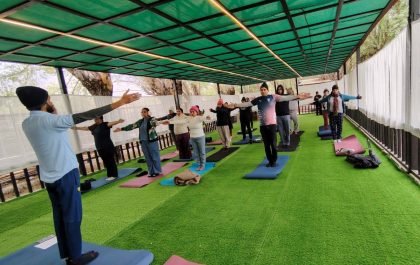
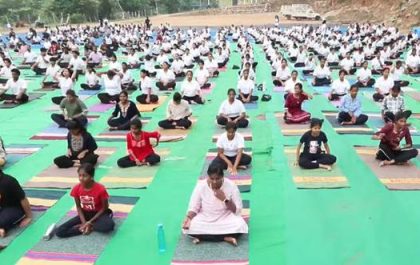
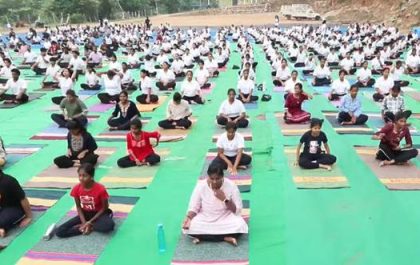
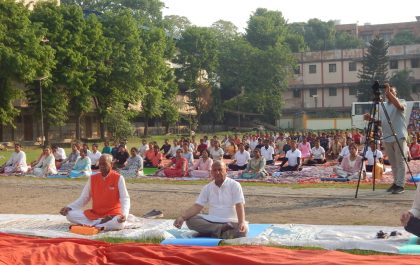
Yoga, has transcended geographical boundaries and cultural differences to become a global phenomenon since the honourable Prime Minister, Shri Narendra Modi, in 2014, marshalled the support of a record number of member UN countries for International Yoga Day. Through our country’s concerted and consistent efforts Yoga has become a global phenomenon with immense potential to offer well-being, connectedness and mindfulness solutions to the fractured world that we live in today. The word “yoga” itself is derived from the Sanskrit word “yuj,” which means to unite or connect. Therefore, there is much more to Yoga than the simplistic idea that it is a set of asanas or breathing techniques. Beyond the physical aspect, yoga is deeply intertwined with spiritual and philosophical ideas, including the belief that everyone of us is connected at a fundamental level. This very idea of connection also lies at the heart of the philosophy of Vasudhaiva Kutumbakam or that we all part of one family, one essence.
In yoga, the individual aims to connect the body, mind and spirit, fostering a sense of inner balance and peace. It encourages us to connect with our inner selves, and this journey inward often leads to the realization that one is part of a larger whole, inextricably connected to the world. Vasudhaiva Kutumbakam, often cited in the Upanishads and other ancient Indian texts urges us to recognize that our actions impact not only our immediate surroundings but the entire world. When we embrace this philosophy, we are motivated to act with yogic mindfulness, compassion and responsibility towards the global community.
At The Yoga Institute, these principles are deeply ingrained, not only in our teachings but also in the very fabric of our institution’s culture. Our doors are wide open to individuals of all backgrounds – regardless of their religion, caste, creed, or nationality – all coming together with a shared purpose: the exploration of our shared humanity. Our ultimate goal is to recognize the divine essence within each of us. This is the essence of the yoga journey – a unifying thread woven into the tapestry of yoga ashrams across the nation.
While every yoga ashram may have its unique teaching methods and distinct practices, we all harmoniously strive toward a common objective: leveraging the power of yoga to alleviate humanity’s myriad challenges. This serves as a prime example of the Universal Unity principle in action.
Vasudhaiva Kutumbakam encourages us to appreciate the diversity of cultures, languages, and traditions that enrich our global family. This celebration of diversity resonates with the concept of yogic attitudes or the four parikramas of karuna, mudita, upeksha and maitri and vice versa as well. An awareness and acceptance of these parikramas in our daily lives allows us to assimilate more closely with others despite our differences and to maintain a state of equanimity despite the extant externalities. At The Yoga Institute in Mumbai, we provide a classical interpretation of Yoga for individuals embarking on their path of self-discovery and personal growth. Our perspective emphasizes that Yoga essentially involves cultivating a serene outlook on life by embracing the four yogic parikramas. Technically, Yoga is the science of mastering the mind, and as such, our instructional approach is firmly rooted in classical Yoga principles, emphasizing the cultivation of a compassionate and affectionate disposition towards others. In its essence, Yoga inherently fosters the growth of universal unity.
The world as it is today, stands to gain tremendously from the ancient wisdom of yoga and the philosophy of Vasudhaiva Kutumbakam. Global issues like climate change, economic inequality and pandemics highlight the urgent need for cooperation and understanding. These provide a moral compass, guiding us towards responsible and compassionate actions in the face of these grave modern challenges. The COVID-19 pandemic, in particular, has shown us how interconnected the world truly is. The virus knew no borders, and the only effective response was a collaborative one. It gives me pride to recount how India was at the forefront of the endeavour to foster equitable access to vaccines and healthcare during the pandemic. Vasudhaiva Kutumbakam too underscores that, in the face of shared challenges, we must put aside differences and work together for the common good.
To embrace the philosophy of Vasudhaiva Kutumbakam and Yoga and integrate them into our lives, education and awareness are crucial. Schools and educational institutions need to go beyond the rigours of traditional academics and incorporate the wisdom of these lived traditions in the lives and thoughts of their students. Yoga and meditation need to be integral components of educational programs, helping young minds cultivate the four parikramas and other yogic bhavas. Organizations like Indian Yoga Association have a pivotal role to play in promoting these ideals and designing the mindset of the future generations of our country. The Indian Yoga Association has proactively devoted its efforts towards this objective. I would like to commend the Indian Yoga Association for their efforts in disseminating the ideals of a yogic lifestyle and values worldwide despite differences of geography, culture and traditional societal value systems.
Yoga teaches us to connect with our inner selves, promoting inner peace and self-realization. Meanwhile, Vasudhaiva Kutumbakam reminds us that we are part of a global family, encouraging us to treat every individual with love, respect, and compassion. As we navigate the challenges of the 21st century, these philosophies serve as a guiding light, reminding us that we are not alone but part of a vast, diverse, and interconnected global family. In the words of Mahatma Gandhi, “You must be the change you want to see in the world.” By living with these principles, we can indeed be that change.