


By Shri N. Elumalai, PhD Scholar (Yoga Science), MAHER
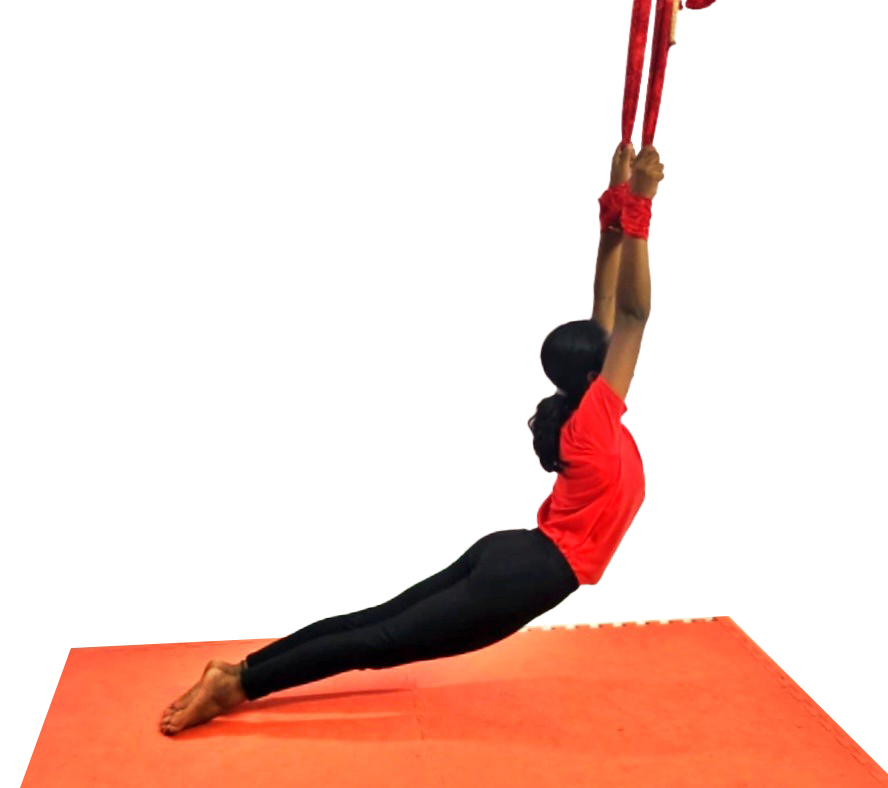
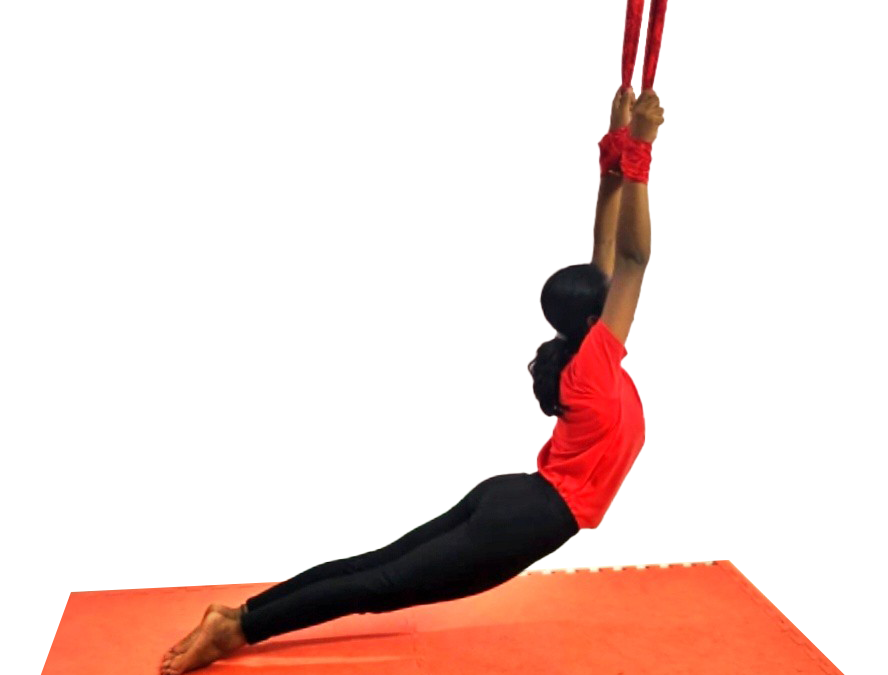
Urdhva Mukha Svanasana Hasta (Aerial Variation with Hammock Support) is an intermediate-level aerial yoga posture that combines the benefits of the traditional Upward-Facing Dog with the supportive traction of a hammock. The pose provides a deep stretch to the front body while strengthening the arms, shoulders, back, and core muscles. The hammock assists in maintaining proper alignment, reducing strain on the wrists and lower back, and enabling practitioners to experience a safer and more expansive backbend.
This practice enhances flexibility and mobility in the shoulders, chest, upper back, and thoracic spine. It also encourages deeper breathing, improves lung capacity, stimulates circulation, supports digestion and metabolism, and promotes a sense of openness, vitality, and emotional well-being.
Steps to Practice
Place a yoga mat beneath the hammock to provide cushioning and stability. Adjust the hammock height so that it comfortably supports the wrists while kneeling with the arms extended overhead.
Kneel facing the hammock and place the wrists into the hammock using the Flamenco Grip, keeping the wrists neutral and the elbows softly bent. Inhale and lengthen the spine while broadening the collarbones.
Maintaining an open chest, exhale and gently hinge forward. Step or slide the knees closer to the hammock and glide the torso forward and downward toward the mat.
Extend both legs straight back, pressing the tops of the feet firmly into the floor. Engage the quadriceps and draw the shoulders away from the ears.
Inhale and lift the chest forward and upward. Press through the tops of the feet to elevate the thighs and hips off the mat, similar to Urdhva Mukha Svanasana (Upward-Facing Dog). The hammock provides gentle traction, allowing for greater lift and expansion.
Roll the shoulders back and down, drawing the shoulder blades toward the spine. Keep a slight bend in the elbows to avoid locking the joints.
Engage the mid-back muscles for shoulder stability. Draw the lower ribs inward and lengthen the tailbone to protect the lumbar spine.
Maintain a soft gaze forward or slightly upward. Breathe smoothly and evenly. With each inhalation, expand the chest and side ribs; with each exhalation, engage the core and lengthen through the spine.
Hold the posture for 6–8 breaths, or according to individual comfort and capacity.
To release, exhale slowly and lower the chest. Exit the Flamenco Grip, place the hands beneath the shoulders, and gently slide the knees forward to return to a kneeling position.
Rest the arms alongside the body or on the thighs. Conclude the practice in Balasana (Child Pose) or Makarasana (Crocodile Pose) for relaxation.
Benefits
Deeply stretches the front body, including the chest, abdomen, hip flexors, quadriceps, shoulders, and neck.
Strengthens the arms, shoulders, wrists, back, pelvis, and legs.
Improves spinal flexibility, posture, alignment, and overall body awareness.
Enhances mobility of the shoulders, chest, and thoracic spine, preparing the body for advanced backbending and aerial yoga practices.
Expands the chest and diaphragm, increasing lung capacity and supporting healthy respiratory and cardiovascular function.
Stimulates the abdominal organs, aiding digestion, metabolism, and elimination while helping relieve constipation and bloating.
Promotes healthy circulation and improves oxygen supply throughout the body.
Balances the Pancha Vayus and supports the harmonious flow of energy, vitality, and digestive fire (Agni).
Stimulates the pituitary, pineal, and thyroid glands, contributing to hormonal balance and metabolic regulation.
Calms the nervous system, reduces stress and fatigue, and promotes mental clarity and emotional well-being.
Enhances blood circulation, supports nervous system health, and helps maintain overall physical and energetic balance.
Therapeutic Applications
May help relieve mild lower back discomfort when practiced correctly under guidance.
Supports respiratory health and may benefit individuals seeking to improve breathing efficiency.
Can be useful in yoga therapy programs aimed at posture correction and spinal health.
May assist in reducing stress-related tension and promoting mental relaxation.
Contraindications and Precautions
This posture should be avoided or practiced only under expert supervision by individuals with:
Wrist, ankle, shoulder, or hip injuries or sprains
Recent surgeries involving the knees, ankles, shoulders, wrists, hips, or spine
Cervical spondylosis
Carpal tunnel syndrome
Significant scoliosis or kyphosis
Serious heart conditions
Severe joint weakness or instability
Pregnancy
Advanced age with reduced mobility or balance
Individuals with arthritis of the knees, osteoporosis, or other musculoskeletal concerns should practice cautiously and only under the guidance of a qualified yoga therapist or experienced yoga teacher.