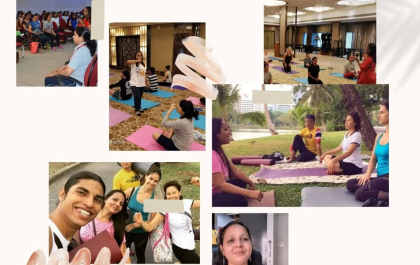


by Aattangaogam, Associate Centre, IYA
Pregnancy is a sacred and transformative phase in a woman’s life, where physical well-being, emotional balance, and mental calm play a vital role in nurturing new life. Rooted in the timeless wisdom of yoga, Attangaogam, Associate Centre of Indian Yoga Association offers gentle, safe, and holistic practices that support the mother’s body and mind through the journey of pregnancy. When practiced with awareness and medical guidance, yoga helps the expectant mother adapt to the natural changes of pregnancy, prepares her for childbirth, and creates a calm, positive environment for the growing fetus.

Aligned with the spirit of the Swasth Nari, Sashakt Parivar Abhiyaan, this initiative highlights the role of yoga as a preventive and promotive health practice for maternal well-being. Through simple asanas, relaxation techniques, and pranayama, the practices shared in this article aim to promote a joyful pregnancy, emotional stability, and a deeper connection between mother and child—laying the foundation for the birth of healthy, balanced, and noble future generations.
General Practice Guidelines
deal time: Morning at 6:00 am or evening at 6:00 pm
Condition: Empty stomach, after routine morning activities
Environment: Clean, calm, and well-ventilated room
Clothing: Comfortable cotton attire
Yogasana Practice
- Ardha Kuthapatha Asanam (Butterfly Pose)
Sit upright with legs stretched forward.
Bend the knees and bring the soles of the feet together, drawing them close to the body.
Hold the feet gently with both hands.
Keep the spine erect, shoulders relaxed.
Allow the knees to gently move up and down like butterfly wings or remain still in the posture for 1–3 minutes, breathing naturally and calmly.
Never force the knees downward—allow gravity and breath to guide the movement.
Slowly release the posture and relax.
For Pregnant Women:
Sit with adequate back support. Avoid deep forward bending. Use cushions under knees or hips if needed. Discontinue immediately and consult your doctor if there is pelvic pain, discomfort, or cramping.
Deep Relaxation
- Yoga Nidra / Shanti Asanam (Up to the First Trimester)
Lie down comfortably on the back, facing upward.
Gently turn to the right side and rest in a fully relaxed state.
When getting up, always turn to one side first and rise slowly.
This method should be followed while resting or sleeping.
Pranayama Practice: Nadi Shuddhi Pranayama
Sit comfortably in a cross-legged position on the floor or sit upright on a chair. Keep the spine erect, shoulders relaxed, and face calm.
Practice Time & Rounds:
Practice 5 slow rounds each.
Can be done in the morning, evening, and before bedtime.
Important Guidelines:
Breathe gently and naturally through the nose.
Do not hold the breath.
Avoid fast, forceful, or strenuous breathing.
Maintain awareness and relaxation throughout the practice.
Nadi Shuddhi Pranayama – Stage 1:
Inhale through the left nostril and exhale through the right nostril.
Inhale through the right nostril and exhale through the left nostril.
(This completes one round.)
Nadi Shuddhi Pranayama – Stage 2:
Continue alternate nostril breathing as above.
Allow the breath to become slow, smooth, and effortless.
Key Benefits
Helps the body and mind accept pregnancy joyfully, preparing for a smooth and natural labor.
Supports physiological, mental, and emotional balance, nurturing the healthy growth of the fetus.
Supporting Lifestyle Practices
Satvik Diet: Include green leafy vegetables daily—especially spinach (keerai), except Agathi keerai.
Slow Walking: 30–45 minutes every day.
Collective Yoga Practice: Ashtangayoga practices for at least 21 minutes daily, performed by family members and well-wishers to consciously welcome the new life.
Yoga for a HealthyPregnancy