

A brief Report by Yogasadhaka Nilachal
Introduction
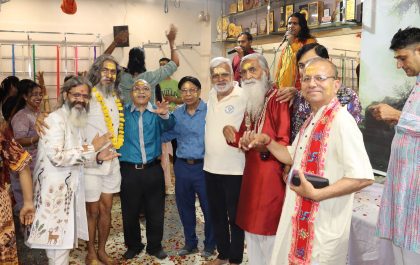
Yogachariya Jnandev Giri is the Founder and Director of Gurukula UK and Portugal, and the visionary behind Sanatan Yoga. A disciple of Gitananda Rishiculture Yoga, he holds the title of Yoga Chikitsa Acharya from Ananda Ashram (ICYER), Puducherry. With a Master’s degree in Yoga and Preksha Meditation as a gold medallist, he trained under revered gurus such as Ammaji Meenakshi Devi Bhavanani and Dr. Ananda Balayogi Bhavanani. Yogachariya Jnandev founded Yoga Satsanga Ashram in Wales, UK, and has authored over a dozen books on yoga, wellness, and therapy. His teachings merge traditional wisdom with scientific insights, with a mission to bring authentic yogic therapy to the world. As the 14th speaker in the CYCLE Program, he shared his knowledge on Yoga Chikitsa, combining traditional and scientific perspectives on health, consciousness, and personal transformation.

Ekam vs. Sampurna Marga
There are essentially two primary paths for seekers, differentiated by the inherent qualities of the individuals. The key distinction between these paths lies in the nature of the seeker. They are:
Ekam Marga (Single Path) – ‘Ekam Marge Purna Marge’. It is a focused route suitable for advanced seekers seeking liberation through one practice. A single practice (like dhyana or pranayama) can be enough for self-realization or Atma-Jnana.’

Sampurna Marga (Complete Path) – ‘Sampurna Marge Swastha Marge’. It is a holistic model essential for most individuals today who face multi-layered challenges involving stress, physical ailments, emotional trauma, and spiritual disconnection. For health, wellness, and healing, a more comprehensive and integrated approach is needed, including multiple yogic techniques.
Philosophical and practical foundation for the Yoga Chikitsa
Various texts provide the philosophical and practical foundation for the Yoga Chikitsa methodology ensuring authenticity and depth of knowledge.

Some key references include:
Hatha Yoga Pradipika & Gheranda Samhita: Traditional texts that outline Hatha Yoga practices such as asanas, kriyas, pranayama , bandhas, and mudras.
Shiva Samhita, Vijnana Bhairava Tantra, & Shiva Swarodaya: Dialogues of Lord Shiva on yogic wisdom, Tantra, and Swara Yoga.
Bhagavad Gita: A fundamental text on yogic philosophy and psychological resilience, based on Krishna’s counseling of Arjuna.
Yoga Vashistha: A text on mind training and self-realization, where Vashistha counsels Lord Rama on overcoming suffering.
Yoga Sutras by Patanjali: The foundation of Yogic Psychology, detailing Chitta (mind), Kleshas (mental afflictions), Samadhi (meditative absorption), and the Ashtanga Yoga system.
Upanishads: Ancient scriptures that explore the deeper spiritual dimensions of yoga and self-awareness.

Multi-Path Approach: Integrating Different Yoga Systems
Different individuals need different approaches for healing. A multi-dimensional approach ensures that participants develop a broad and deep understanding of yoga therapy, making them capable of adapting their knowledge to different individuals and health conditions.
Some key paths include :
Hatha Yoga: Physical body cleansing, asana-based therapy, prana activation.
Karma Yoga: Healing through selfless action and service.
Jnana Yoga: Using wisdom and knowledge for psychological healing.
Bhakti Yoga: Emotional healing through devotion and faith.
Tantra Yoga: Working with chakras, energy channels, and inner transformation.
Swara Yoga: Using breath cycles and polarity balancing for mental and physical well-being.
Ashtanga/Raja Yoga: A systematic path of yama and niyama incuding self-discipline, meditation, self-mastery, etc.
Mantra Yoga: Healing through chanting, sound and vibration.
Pranayama Yoga: Prana regulation with the help of breath for vitality and mental clarity.
Dhyana Yoga: Meditation practices for mental balance and self-awareness.
Yogic 12-Point System of Diagnosis & Health Evaluation
In Gitananda Yoga Tradition, a unique 12-point diagnostic system is used to assess a person’s health from a yogic perspective.
These points include:
Trigunas (Three Gunas): Sattva (balance), Rajas (activity), Tamas (inertia).
Tridoshas (Three Doshas): Vata (air/space), Pitta (fire/water), Kapha (earth/water).
Trivasanas (Psychological Background): Desire-driven tendencies.
Prana (Vital Energy): The five major Prana Vayus regulating life functions.
Abhyasa (Personal Discipline): Dedication to yogic practice.
Jiva Karma (Lifestyle): Daily habits and karmic patterns.
Chetana (Quality of Thoughts): Mental clarity and emotional balance.
Vacha (Quality of Speech): Expression and communication health.
Aahara (Diet & Nutrition): The role of food in healing.
Viparita Buddhi (Destructive Habits): Unhealthy thought patterns.
Jiva Vrittis (Body Rhythms): Biological and energetic cycles.
Sankalpa (Ideals & Intentions): Personal vision and life purpose.
Practical Applications: Healing Through Yoga Chikitsa
Key Areas of Yoga Therapy Application:
Stress Management & Relaxation:
Using Hatha Yoga, Pranayama, Meditation, and Mantra Chanting to reduce stress and calm the nervous system.
Strength, Flexibility & Rehabilitation:
Improving physical endurance, flexibility, and postural alignment through asanas, kriyas, and vinyasa sequences.
Mind & Life Management:
Utilizing Yoga Sutras, Bhagavad Gita, Upanishads, and Ayurveda for mental resilience and emotional healing.
Dosha & Guna Balance:
Incorporating Ayurvedic principles into yoga therapy for holistic health maintenance.
Holistic Lifestyle Modifications:
Establishing a yogic daily routine (Dincharya), including dietary adjustments, sleep hygiene, and mindful practices.
Chakras & Kundalini Activation:
Understanding and balancing the seven chakras for energy healing and spiritual well-being.
Integrating Yoga into Modern Healthcare
Drawing from the Yoga Sutras, Yogachariya Janandev also shared the Heya-Hetu-Hanam-Upaya model for clinical diagnosis and therapy—identifying symptoms, root causes, therapeutic goals, and tools. He explained the importance of Abhyasa and Vairagya in shifting mindset and behavior. Understanding anatomy and psychology from a yogic lens was presented as essential for integrating yoga with allopathic healthcare.
Janandev ji advocated incorporating psychological principles and interpersonal dynamics into therapy. He emphasized rapport-building, self-purification through Yamas and Niyamas, and the ethical responsibility of therapists.
Yoga Therapy for Various Conditions
During the Q&A, Yogachariya addressed therapeutic approaches for a wide range of conditions:
Memory Loss (Age 70+): Suggested neuroplasticity-enhancing practices combining breath, sound, and movement.
Mental Health: Focused on Manipura and Anahata chakras, alongside diet and daily routine.
Cancer Support: Recommended gentle Anulom Vilom, Pranava chanting, and imagery meditation.
Trauma: Encouraged relaxation tools and emotional release methods.
Gut-Brain Health: Advised a nourishing diet with seasonal fruits, fermented foods, and sprouts.
Other Conditions (Allergies, Vertigo, Heart Issues): Offered brief but precise yogic practices aligned with individual needs.
Conclusion
This session with Yogachariya Jnandev Giri reflected a living tradition of Yoga Chikitsa, skillfully blending timeless yogic wisdom with contemporary therapeutic needs. The enlightening session by Yogachariya Jnandev Giri showcased the profound capacity of yoga to adapt and address diverse health challenges while nurturing the human spirit.