

A brief Report by Yogasadhaka Nilachal
Introduction
“Yoga therapy is not about treating diseases with poses — it’s about living yoga, even while unwell.”
— Shri Durgadas Savant
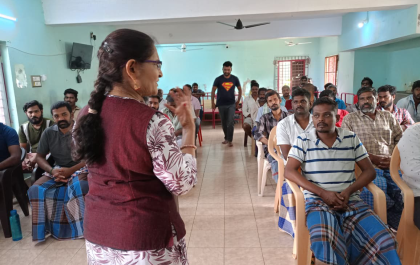
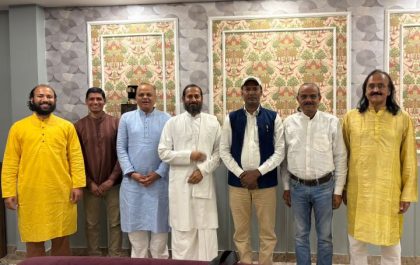
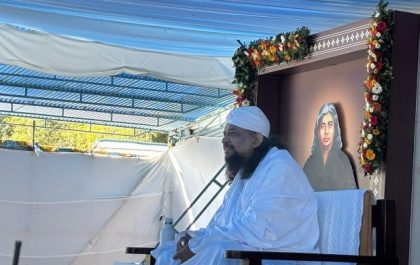
In a spellbinding session of the Indian Yoga Association’s CYCLE (Continuous Yoga Chikitsa Learning and Education) series, Shri Durgadas Savant, senior Yoga Acharya and vice chairman of Yoga Vidya Niketan (YVN), redefined the art and science of Yoga Therapy. Through a seamless blend of ancient philosophy, experiential wisdom, and live demonstrations, the session stood as a testament to how traditional kriya practices can play a transformative role in healing.
Shri Durgadas Savant ji, Vice Chairman of Yoga Vidya Niketan (YVN) and IYA’s Maharashtra State Chapter, holds an M.Sc. in Physiology, diplomas in Yoga Therapy and Naturopathy, and an M.A. in Yogashastra. With over 35 years of Yoga teaching experience, he serves on IYA’s SAAC, contributed to India’s G-20 Civil-20 initiative, and is part of the BIS under AYUSH Ministry. A prolific writer, he authored the book Nisargahar, available in four languages. Known for healing himself from serious illnesses using Nature Cure, he has received multiple honours, including the Yoga Bhushan Award and Lifetime Achievement Award.
Yoga Therapy: More Than Technique
In his opening remarks, Shri Savant ji challenged the notion of “Yoga Therapy” as a technique-driven model. He emphasized that true Yoga Therapy is nothing but “Yoga Sadhana practiced by the unwell.” Instead of treating Yoga like a pill or a medical intervention, he advocated for a holistic, lifestyle-based, transformative approach.
He drew upon Vedantic philosophy, the Yoga Sutras, and Hatha Yogic tradition to emphasize Yoga as a journey from the gross (Annamaya) to the subtle (Atman), and stressed that healing is only one of Yoga’s many fruits when approached correctly.
Yoga and Ayurveda
Shri Durgadas Savant ji offered valuable insights into the cleansing practices of both Yoga and Ayurveda, highlighting their shared goal of internal purification and systemic balance. He explained that while Yoga employs six Shatkarmas—Neti, Dhauti, Nauli, Basti, Kapalabhati, and Trataka—to purify the nadis and enhance pranic flow, Ayurveda prescribes five Panchakarma therapies that involve medicated oils, herbal decoctions, and dietary regimens for detoxification. Drawing comparisons, he noted that Yogic techniques like Vamana Dhauti (induced vomiting) are swift and self-administered, often taking just a few minutes, whereas their Ayurvedic counterparts are part of elaborate, multi-day therapeutic protocols. Both systems aim to balance the doshas and remove accumulated toxins, but Yoga emphasizes self-practice and spiritual readiness, whereas Ayurveda follows a clinically guided, substance-based approach. Together, they offer complementary pathways to holistic health and deeper meditative experiences.
Shatkarma: The Foundation of Internal Cleansing
The core of the session centered around Shatkarma or the six cleansing techniques of Hatha Yoga. These are not merely preparatory tools but transformational practices that purify the nadis (energy channels), balance doshas, and prepare the practitioner for pranayama and meditation. The six cleansing practices are:
Neti – Nasal cleansing (e.g., Jala Neti, Sutra Neti)
Dhauti – Upper digestive tract cleansing
Nauli – Abdominal churning and massage
Basti – Yogic enema (colon cleansing)
Kapalabhati – Frontal brain cleansing
Trataka – Concentrated gazing practice
Shatkarma techniques were explained in relation to:
Clearing mucus and sinus congestion
Enhancing respiratory efficiency
Balancing the Ayurvedic doshas (Kapha, Pitta, Vata)
Improving digestive health
Detoxifying internal organs
Supporting mental clarity and meditative stability
The speaker drew parallels between the Panchakarma system in Ayurveda and the Shatkarmas in Yoga, noting their shared aim of systemic detoxification but contrasting their approaches. Yogic kriyas are self-applied and spiritually rooted, while Panchakarma involves clinical support and medicinal interventions.
Nasal and Internal Cleansing: Science, Technique, and Care
Special attention was given to Neti and Dhauti practices:
Key Takeaways:
Always use lukewarm, isotonic saline water to prevent irritation.
Post-kriya techniques like Kapalabhati and bending poses are essential to avoid water retention.
Sutra and rubber Neti offer therapeutic massage to the nasal passages.
Dhauti methods improve digestive fire, reduce acidity, and support organ rejuvenation.
Techniques like Gaja Karni was demonstrated with high control, reflected exceptional mastery.
Safety and Contraindications
Shri Savant repeatedly cautioned practitioners against unsupervised kriya practice. Contraindications include:
Acute sinus infections
Hypertension
Pregnancy
Ulcers or severe acidity
Post-surgical recovery
“Instagram is not your teacher. These practices should be learned under the guidance of a trained yoga expert.”
Conclusion
The session was far more than an academic presentation — it was a powerful lived experience of Yogic wisdom in action. Through traditional teachings and personal insights, he reminded us that Yoga is not merely about asanas or breath techniques but about transformation from within.
His message was clear and timely:
“We cannot change the world outside, but we can cleanse ourselves within.”
In a world clouded by stress, imbalance, and disconnection, the Shatkarmas offer a timeless toolkit for physical detoxification, mental clarity, and spiritual upliftment. Whether you’re a yoga therapist, student, or curious seeker, CYCLE program reaffirms the foundational truth that healing begins with purification — of body, breath, mind, and consciousness.
Let this be an invitation to rediscover the cleansing roots of Yoga and commit to a life of inner balance, awareness, and authentic practice.