








Introduction
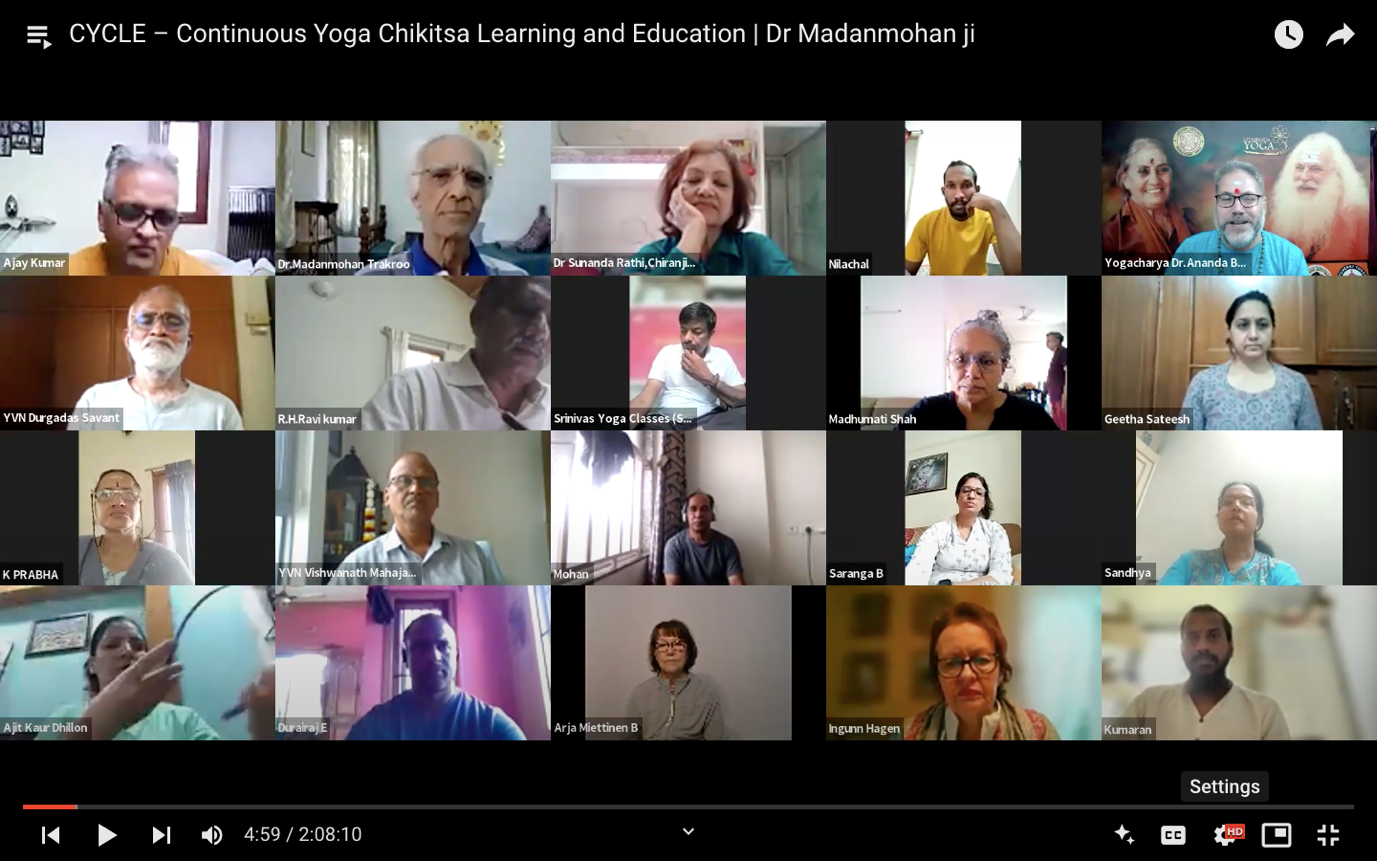
The 6th Session of Continuous Yoga Chikitsa Learning and Education (CYCLE) took place on July 7, 2024, with Yoga Chikitsa Ratna Dr Madanmohan as the esteemed speaker, focusing on Yoga Therapy Research. Fondly known as the ‘Bhishma Pitamaha,’ Dr Madanmohan is a trailblazer in integrating yoga into medical practice. As the Founding Director of the Center for Yoga Therapy, Education, and Research (CYTER) at Sri Balaji Vidyapeeth (SBV), he has been pivotal in advancing the therapeutic applications of yoga. With a distinguished career spanning over four decades, Dr. Madanmohan has held prestigious positions as Emeritus Professor of Physiology at JIPMER, MGMCRI, and AVMC. His groundbreaking research in yoga and yoga therapy has had a lasting impact on the field, shaping its future.
Mind and Research
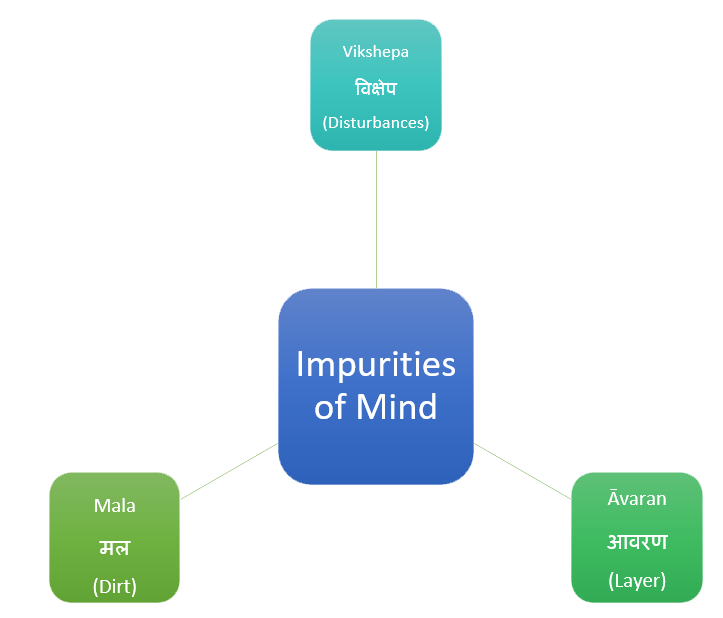
Dr. Madanmohan emphasizes the significance of having a clear and focused mind for effective research. He compares the mind to a mirror, which must be clean and steady to reflect images accurately. According to him, distractions, impurities, and hesitation cloud the mind, much like dirt and instability affect a mirror. These disturbances prevent the researcher from perceiving reality clearly. To ensure clarity in thought and perception, the mind must be free from mala (impurities), vikshepa (distractions), and avarana (hesitation). This mental discipline is achieved through regular yogic practices, which help cultivate focus, concentration, and reflection.
यज्जाग्रतो दूरमुदैति दैवं तदु सुप्तस्य तथैवैति।
दूरड्गमं ज्योतिषां ज्योतिरेकं तन्मे मनः शिवसंकल्पमस्तु।।
यजुर्वेद ३४:१
yajjāgrato dūramudaiti daivaṃ tadu suptasya tathaivaiti|
dūraṅgamaṃ jyotiṣāṃ jyotirekaṃ tanme manaḥ śivasaṅkalpamastu ||34: 1||
- That mind which wanders in the waking state as well as in sleep, the far-wanderer, that which is the one and only illuminator of knowledge, may that mind of mine have auspicious thoughts.
Qualities of a Researcher’s Mind
Dr. Madanmohan asserts that certain qualities are essential for a researcher.
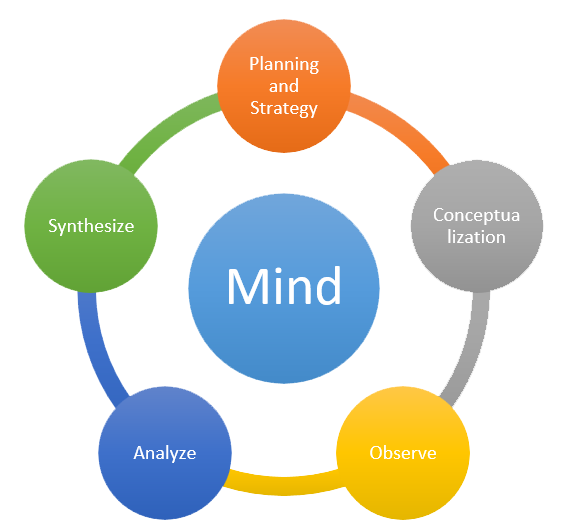
These include :
Curiosity and Inquiry: A desire to explore and understand the unknown.
Patience and Perseverance: Research often takes time, and one must remain focused despite obstacles.
Open-mindedness: Researchers must be willing to question their assumptions and consider alternative theories.
The Importance of Research
Research is a systematic and objective process aimed at discovering or revising facts and contributing to the search for new knowledge.
The features of research include being:
Systematic: Follows a structured process.
Objective: Free from biases and emotions.
Innovative: Explores new ideas or offers solutions to existing problems.
Critical: Involves rigorous evaluation of data and methodologies.
Reproducible: Ensures other researchers can replicate findings under similar conditions.
Empirical: Grounded in observable evidence.
Analytical: Involves methodical data analysis to draw conclusions.
Why Conduct Research?
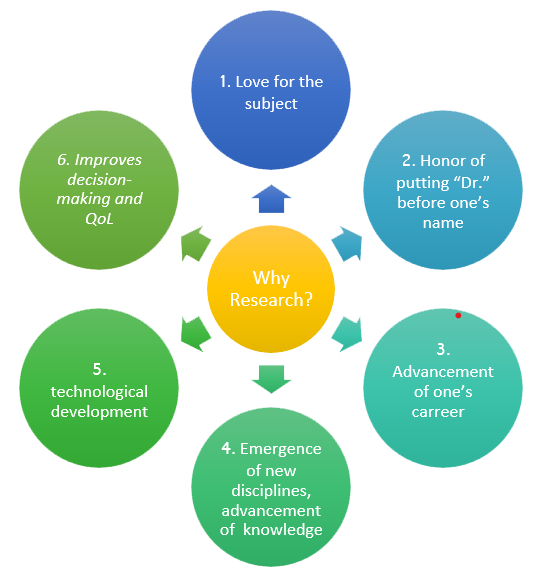
There are various motivations behind research, including a passion for the subject, career advancement, and the emergence of new disciplines. Beyond personal benefits, research contributes to technological advancements, improves decision-making, and enhances the quality of life. However, unethical research can harm participants and mislead the public, as seen in manipulated cigarette studies and unethical experiments on captives.
Integrating Teaching and Research
At different levels of education, teaching and research should complement each other. At the school level, teaching involves structured knowledge, whereas, at the college and university levels, research encourages active participation and knowledge creation. The dual role of teaching and research fosters an environment where students contribute to advancements in knowledge while learning. This approach prepares students for the complexities of the real world.
The Aim of Education
Education should cultivate individuals who are morally upright, self-controlled, and well-educated. It should not be limited to “bread study” (qualifications for a job) but should include both Apara Vidya (worldly knowledge) and Para Vidya (spiritual wisdom). Together, these dimensions aim to create well-rounded individuals capable of contributing positively to society.
Importance of Seminars
Seminars play a crucial role in strengthening research programs, offering scholars a platform to present their work and receive feedback. Universities should institutionalize seminars as an integral part of their programs. Dr. Madanmohan was actively involved in presenting research in seminars, providing mentorship to students, and engaging in intellectual discussions.
Ancient Rishis and Research
The ancient Rishis of Bharat were pioneering researchers whose contributions laid the foundation for diverse fields, including yoga, Ayurveda, and astronomy. The Rigveda, with its vast repository of knowledge, reflects their deep exploration of knowledge. The term “yoga” is derived from the root word “yuj,” meaning to unite, symbolizing the holistic approach of these ancient sages. This connection between intellectual and spiritual pursuits underscores the significance of research in the ancient Indian context.
Contributions of Ancient Rishis
Yajnavalkya: Authored the Yoga Yajnavalkya, discussing yoga’s practice and philosophy.
Patanjali: Systematized yoga into the eight limbs (Ashtanga Yoga) through the Yoga Sutras.
Tirumular: Authored the Tirumandiram, combining spiritual teachings and yogic practices.
Vyasa: Provided insights and interpretations of the Yoga Sutras.
Vashistha: Authored the Yoga Vashistha, focusing on Vedanta and yoga philosophy.
Modern Gurus and Their Contributions Swami Kuvalayananda:
Pioneered the scientific study of yoga and founded Kaivalyadhama.
T. Krishnamacharya: Revived Hatha Yoga and trained influential students like B.K.S. Iyengar.
Swami Sivananda Saraswati: Spread the principles of yoga and Vedanta through teachings and writings.
Shri Yogendra: Established The Yoga Institute, focusing on yoga for householders.
Maharishi Mahesh Yogi: Popularized Transcendental Meditation globally.
B.K.S. Iyengar: Developed Iyengar Yoga, emphasizing precision and alignment.
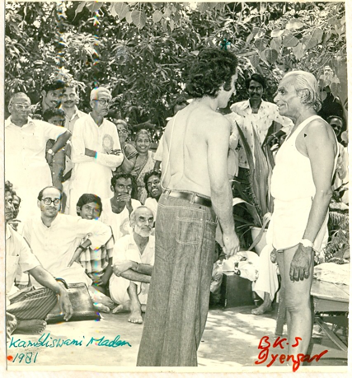
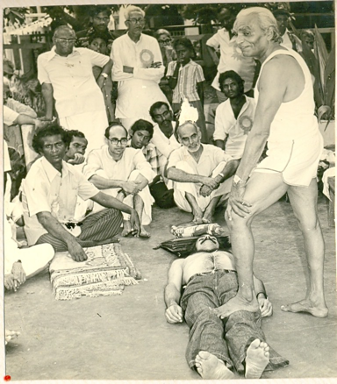
Fig. Dr Madanmohan with Padma Bhushan BKS Iyengar at Kambaliswamy Madam 1981.
Scientific Research in Yoga
Yoga Ratna Dr. Madanmohan mentions several prominent researchers who contributed to the scientific study of yoga:
Dr. Kateel Narasimhan Udupa: Conducted studies on the biochemical changes resulting from yoga practices.
Dr. Herbert Benson: A pioneer in Mind-Body Medicine, integrated spirituality and healing into medical practice.
Dr. Robert Keith Wallace: Advanced the understanding of Transcendental Meditation and its physiological benefits.
Dr. Dean Ornish: Demonstrated that meditation, combined with lifestyle changes, can reduce chronic disease risks.
Dr. Janice Kiecolt-Glaser: Showed that yoga can reduce stress and inflammation, especially in older adults.
Dr. Madanmohan’s Research Contributions
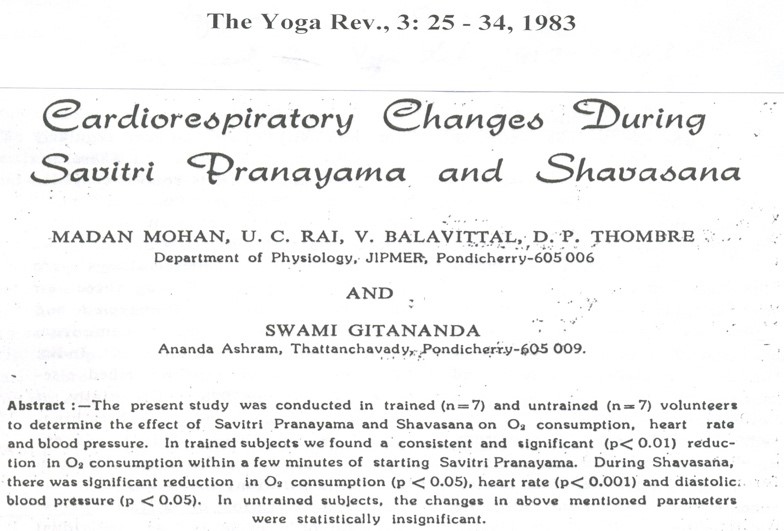
Dr Madanmohan ji published his first research paper on yoga with Swami Gitananda with active help from Yogacharini Meenakshi Devi Bhavanani. The study investigated that how Savitri Pranayama and Shavasana affect oxygen use, heart rate, and blood pressure in trained and untrained people. In the trained group, there was a noticeable drop in oxygen use shortly after starting Savitri Pranayama. During Shavasana, trained individuals also saw a significant decrease in oxygen use, heart rate, and diastolic blood pressure. In contrast, the untrained group showed no significant changes, suggesting that these practices are more effective for those with prior training.
The Mechanism Behind Yoga’s Effectiveness
Yoga helps the body maintain homeostasis and better withstand stress. Slow breathing techniques, awareness-based movements, and pranayama foster balance between the mind and body. These practices also shift the autonomic nervous system towards a balanced state, reducing chronic stress effects. Yoga modulates the hypothalamic-pituitary-adrenal axis, boosts immune function, and supports the body’s natural healing processes

Conclusion
Dr. Madanmohan’s philosophy of yoga emphasizes clarity of mind, ethical conduct, and disciplined practice. His contributions to yoga research have not only advanced the field but also highlighted the importance of integrating yoga into mainstream healthcare. Through seminars, mentorship, and research, Dr. Madanmohan has helped shape the future of yoga therapy, ensuring its continued relevance in both spiritual and medical contexts.