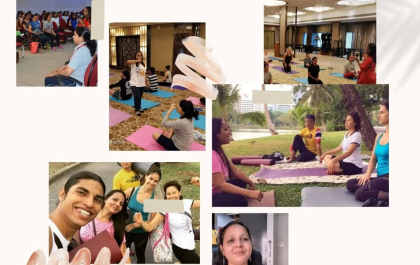


by Dr. Neetinakumar J. Patil
A brief Report by Yogacharya Nilachal
Introduction
On the 23rd Session of the CYCLE Program of the Indian Yoga Association, yoga therapists, teachers, clinicians, and serious students of Yoga Chikitsa came together online for an enriching academic interaction focused on the integrative understanding and application of Yogic principles in health, healing, and clinical practice. Conceived as a sustained learning initiative rather than a one-time event, CYCLE has gradually evolved into a reflective space where yoga therapy is explored in depth—through dialogue, lived experience, and responsible inquiry.
The session led by Dr. Neetinakumar J. Patil focused on Integrative Medicine, a subject of growing relevance in contemporary healthcare and Yoga Chikitsa practice. The lecture drew wide participation, reflecting the increasing need among yoga professionals to engage thoughtfully with medical systems, education, and policy.
The Speaker and His Perspective
Dr. Neetinakumar J. Patil is an Additional Professor (Yoga Therapy & Ayurveda Consultant) at the Centre for Integrative Medicine & Research, Manipal Academy of Higher Education. Trained across Ayurveda, Yoga, Applied Psychology, and Integrative Health, his work spans clinical care, postgraduate teaching, doctoral research, and institutional leadership. This breadth of experience shaped the lecture’s grounded and pragmatic tone.
Rather than presenting integrative medicine as a fashionable concept, Dr. Patil approached it as a clinical and educational necessity—particularly in a country like India, where lifestyle disorders, mental health challenges, and the rising cost of tertiary care demand new ways of thinking about health and healing.
What Is Integrative Medicine & What It Is Not
A significant part of the lecture was devoted to clarifying terminology, an area where confusion often leads to resistance or misrepresentation. Dr. Patil carefully distinguished between complementary, alternative, integrative, and transdisciplinary approaches, emphasising that integrative medicine is not an indiscriminate mixing of systems.
Integration, he explained, must be guided by evidence of safety and efficacy, ethical responsibility, and contextual relevance. Without these, collaboration risks becoming superficial or even harmful. True integration, therefore, requires discipline, humility, and respect for the strengths and limitations of each system.
The Missing Dimension in Modern Healthcare
Dr. Patil drew attention to a central paradox in modern healthcare. While medicine has advanced remarkably in diagnostics, pharmacology, and acute care, it often falls short in addressing the role of stress, behaviour, emotional health, and lifestyle in chronic disease.
Conditions such as diabetes, autoimmune disorders, chronic pain, and metabolic syndromes are deeply influenced by the mind–body interface. Yet clinical encounters frequently prioritise numbers over narratives. Yoga, he suggested, enters precisely at this gap—not as a cure-all, but as a discipline that cultivates self-regulation, awareness, and sustained behavioural change.
Yoga and Medical Education
One of the most compelling segments of the lecture focused on medical students and healthcare professionals themselves. High levels of stress, burnout, emotional fatigue, and screen dependence are now well documented within medical education.
Dr. Patil observed that lack of knowledge is rarely the problem. Medical students often know what constitutes a healthy lifestyle, yet struggle to live it. The missing link is practice. Yoga, when introduced experientially rather than theoretically, helps bridge this gap by fostering resilience, emotional balance, and reflective capacity.
Doctors who practise yoga, he noted, are more likely to understand its value, communicate with empathy, and recommend it responsibly to patients.
Yoga and Ayurveda: A Shared Root
The lecture also revisited the traditional relationship between yoga and Ayurveda. Historically, these were not separate disciplines but complementary dimensions of a unified life science. Yoga addressed mind management and inner discipline, while Ayurveda provided detailed guidance on diet, routine, constitution, and prevention.
Dr. Patil emphasised that even a basic understanding of Ayurvedic principles—such as individual constitution and daily and seasonal rhythms—can greatly enhance yoga therapy practice. This integration supports personalisation, sustainability, and preventive care, aligning closely with contemporary healthcare goals.
Implications for Yoga Chikitsa Practice
For yoga therapists, the session carried an important professional message. Integration does not mean overstepping boundaries or replacing medical systems. It means collaboration, clarity of role, ethical practice, and readiness to refer when needed.
Dr. Patil reminded participants that credibility in healthcare is built through responsibility and consistency. When yoga therapists practise within their scope and communicate clearly with other professionals, they become valued collaborators rather than peripheral contributors.
Conclusion
This CYCLE session reaffirmed the program’s role as a living learning platform for Yoga Chikitsa, one that values depth over dogma and dialogue over division. Dr. Neetinakumar J. Patil’s lecture offered both clarity and direction, encouraging participants to see integrative medicine not as a trend, but as a mindset rooted in prevention, education, and self-awareness.
The session concluded with a quiet but powerful reminder: yoga belongs not at the margins of healthcare, but at its foundations when practised with discernment, humility, and commitment to holistic wellbeing.