

This September, as the rains retreat, both the Himalayas – our nation’s crown – and Punjab – our nation’s breadbasket – bear the scars of devastating floods and environmental disruption. The mountains that gift us life-giving waters and the fertile plains that nourish our people are crying for our care. Just as a balanced mind is the foundation of a harmonious life, so too is the preservation of our rivers, ecosystems, and agricultural heartlands the prerequisite for a healthy world and community.

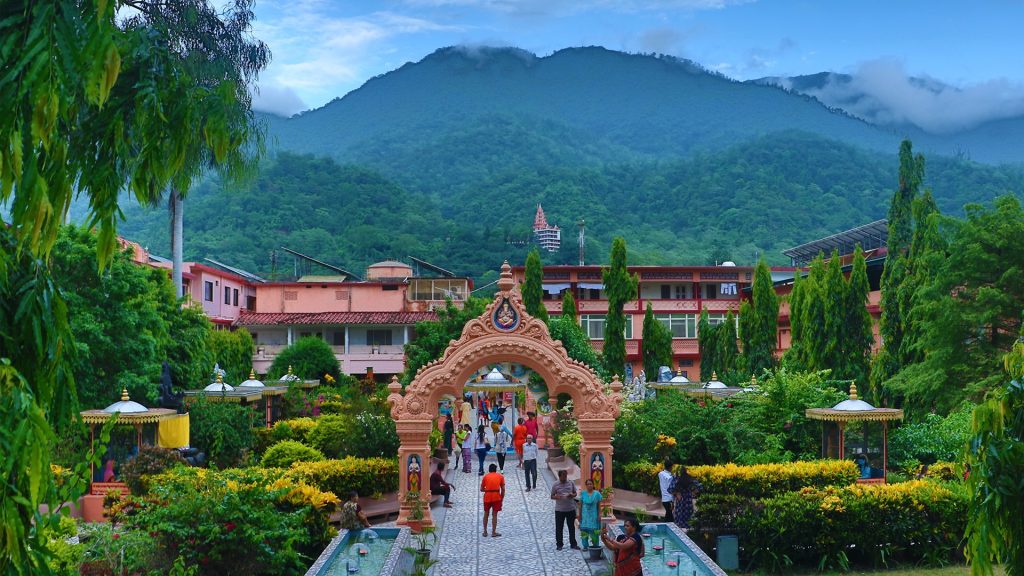
Yoga, at its essence, is not only about what we do on the mat, but how we live and serve in the world. It is a movement from swarth to parmarth—from the small “i” to the infinite “I” that embraces all of humanity. Our practice calls us to see ourselves as instruments of service, dynamic vehicles of change in our communities, and guardians of the Earth that sustains us.
The Bhagavad Gita reminds us:
कर्मण्येवाधिकारस्ते मा फलेषु कदाचन ।
मा कर्मफलहेतुर्भूर्मा ते सङ्गोऽस्त्वकर्मणि ॥ (२.४७)
“You have the right to action alone, never to its fruits. Let not the results of action be your motive, nor let your attachment be to inaction.”

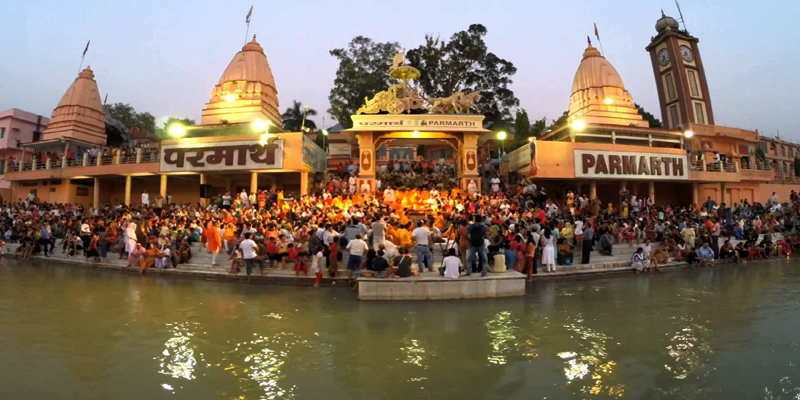
Seva is sadhana. Just as meditation refines the inner landscape, selfless service nourishes the outer world. Both are inseparable aspects of true yoga. Pujya Swami Chidanand Saraswatiji often reminds us: “Serve, serve, and serve like the Sun and like Maa Ganga—without expectation, without hesitation, without discrimination, and without vacation.” This is the yoga of action, the yoga of the heart.
The Maha Upanishad offers us the expansive vision of Vasudhaiva Kutumbakam:
अयं बन्धुरयं नेति गणना लघुचेतसाम् ।
उदारचरितानां तु वसुधैव कुटुम्बकम् ॥
“The narrow-minded think, ‘This one is mine, and that one is not.’ But to the noble-hearted, the whole world is one family.”
This vision stems from udārta—generosity, abundance, and expansiveness. It calls us to live by the yamas and niyamas – ahimsa (non-violence), aparigraha (non-hoarding), satya (truthfulness) – not merely as moral codes but as daily sādhanas that reorient our lives away from greed and ego, and toward harmony with all creation.

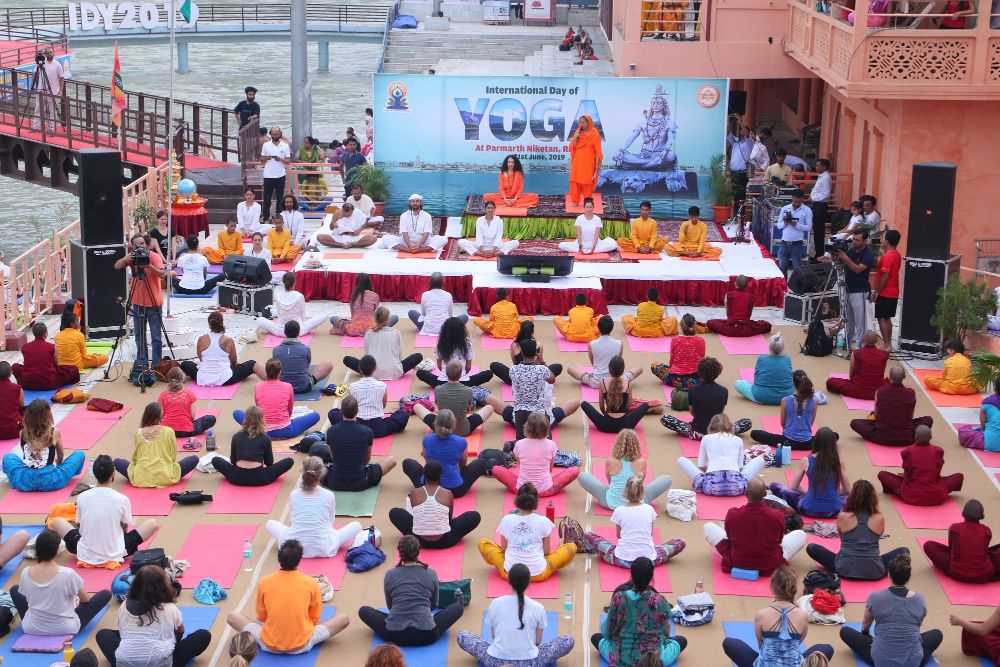
Today, the yoga world is often celebrated for its byproducts – flexible bodies, wellness industries, and growing influence. Yet yoga was never about kaya (the body) or maya (money, glamour, and illusion). Its true aim is moksha – freedom, liberation, and the realization of our oneness with all. When yoga expands beyond asana into awareness, compassion, and responsibility, it transforms into a powerful force for healing – not only of the self but of society and the planet.
This month is especially sacred. We begin with Ganesh Utsav, invoking the remover of obstacles. We honor our ancestors during Pitru Paksha, pledging to make the Earth better for future generations. Soon comes Navratri, a celebration of Shakti, the divine feminine power that protects, nourishes, and sustains. And next month, as Diwali arrives, we will celebrate the festival of light. Yet even now, in every moment and with every festival, we can begin making space for that light – with the opportunity to lead each day as a celebration, each act as an offering, each breath as a prayer.
As yoga practitioners, teachers, and institutions, may we allow these festivals to inspire us to live yoga, not only in asana but in action, not only in personal practice but in planetary preservation. Let us commit to conserving our rivers, protecting our mountains and plains, and honoring our ancestors through conscious choices and compassionate living.
For yoga is not only what we practice, it is who we become. When we live as light, as love, and as seva, we embody the highest promise of yoga: union, liberation, and lasting harmony for all.
With love and gratitude from the banks of Mother Ganga,
In reverence of life through service,
Ganga Nandini